

Attractive articles
updated weekly

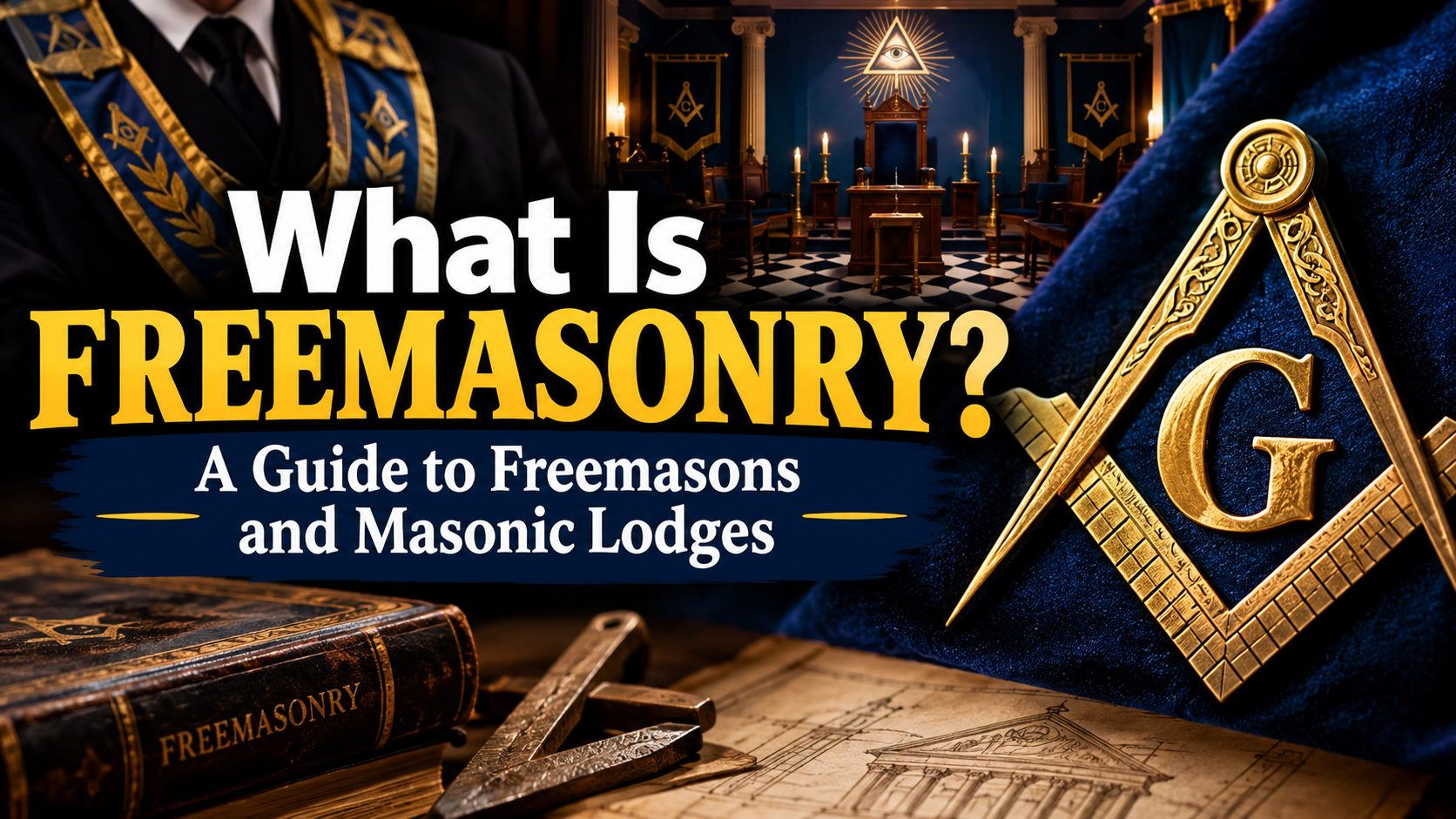
What Is Freemasonry? A Guide to Freemasons and Masonic Lodges

Freemasonry is one of the oldest fraternal organizations in the world, built around fellowship, moral development, personal improvement, and service to others. A person who belongs to it is called a Freemason, or simply a Mason. Freemasons traditionally meet in local organizations known as Masonic lodges, where members take part in meetings, ceremonies, education, social activities, and charitable work.

Although Freemasonry has roots in European traditions associated with stonemasonry, the organization developed into a fraternal society with its own customs, symbols, degrees, and forms of recognition. In the United States, Freemasonry has been part of civic and community life since the colonial period, with the first known American lodge established in 1731.

Today, Freemasonry is not a single worldwide organization controlled by one central authority. It consists of separate Masonic jurisdictions and Grand Lodges, with traditions and membership requirements that can vary. Its history in America also includes distinct traditions such as Prince Hall Freemasonry, which has played an important role in African American history.

So, what exactly is Freemasonry, what do Freemasons believe, and what happens inside a Masonic lodge? Understanding the organization starts with its basic meaning and purpose.

What Does Freemasonry Mean?

Freemasonry, also known as Masonry, is a fraternal organization whose members come together through local Masonic lodges for fellowship, moral and personal development, education, and service to their communities. A member of the organization is called a Freemason or Mason.

The word Freemasonry describes the institution and its traditions, while Freemason refers to an individual member. Although the organization uses terminology and symbols connected with traditional stonemasonry, modern Freemasonry is not a trade organization for builders or stoneworkers.

Freemasonry is organized primarily through local lodges. These lodges provide the setting where members meet, conduct organizational business, participate in Masonic ceremonies, learn about the fraternity's teachings and traditions, and take part in social or charitable activities. Individual lodges generally operate under the authority of a Grand Lodge within a particular Masonic jurisdiction.

The organization also uses a system of degrees to mark stages of a Mason's progress. In traditional Craft or symbolic Masonry, these are the Entered Apprentice, Fellow Craft, and Master Mason degrees. Each degree uses ceremonies and symbolism to communicate lessons about character, conduct, responsibility, and personal development.

What Is a Freemason?

A Freemason is a person who has joined a Masonic lodge and undergone the membership process established by that lodge and its governing jurisdiction. Becoming a Freemason is therefore more than simply identifying with Masonic ideas; membership involves a formal process that can include an application or petition, approval by the lodge, and initiation.

The exact requirements and procedures differ among Masonic jurisdictions. In the United States, individual Grand Lodges govern Freemasonry within their respective jurisdictions, so requirements should be checked with the relevant Grand Lodge or local lodge.

Is Freemasonry a Fraternity?

Yes. Freemasonry is commonly described as a fraternal organization because it brings members together through shared traditions, fellowship, ceremonies, and mutual support.

However, fraternity is only one part of its identity. Masonic organizations also emphasize moral instruction, self-improvement, charitable service, and community involvement. These purposes are expressed through lodge activities, Masonic education, ceremonies, and the symbolic lessons associated with the degrees.

Is Freemasonry a Religion?

Freemasonry is not itself a religion and does not function as a substitute for a member's religious faith. At the same time, religious belief has historically had a place in many Masonic traditions.

Requirements vary by jurisdiction and Masonic body. For example, regular Masonic traditions in the Anglo-American world commonly require candidates to profess belief in a Supreme Being, while Freemasonry generally does not prescribe a particular religion for its members.

This distinction is important because Freemasonry's ceremonies and language can contain references to God, morality, and spiritual subjects without making the fraternity itself a religion.

With its basic meaning established, the next question is what Freemasonry actually teaches its members and which principles guide Masonic life.

What Do Freemasons Believe?

Freemasonry does not have one universal creed that defines the beliefs of every Mason. Masonic requirements and practices can differ between jurisdictions and organizations. However, traditional Freemasonry commonly places emphasis on moral conduct, personal responsibility, brotherhood, respect, charity, and service.

Rather than asking members to follow a particular political or philosophical ideology, Masonic teachings generally use symbols, ceremonies, and lessons to encourage members to examine their own character and conduct.

Moral and Ethical Development

A central purpose of Freemasonry is to encourage members to become more responsible and ethical people. Masonic teachings commonly address qualities such as honesty, integrity, self-discipline, fairness, and responsibility toward others.

These lessons are often communicated through the symbolism and ceremonies associated with the Masonic degrees. The underlying idea is that becoming a better member of a community begins with working on one's own character.

Brotherhood and Fellowship

Brotherhood is another important part of Masonic life. Members meet through their local lodges, develop relationships with other Masons, and participate in activities outside formal ceremonies.

This fellowship is not limited to socializing. The lodge provides a setting where members from different occupations and backgrounds can meet through a shared fraternal tradition.

Charity and Service

Masonic organizations also have a long tradition of charitable giving and community service. Individual lodges and larger Masonic organizations may support charitable programs, educational initiatives, community projects, and assistance for people in need.

The specific programs vary by jurisdiction, but service to others is a recurring theme in Masonic organizations.

Personal Improvement

Freemasonry also encourages members to view membership as a process of self-improvement. Its degrees use symbolic lessons to explore ideas about conduct, responsibility, knowledge, and the way a person should relate to others.

This is why Masonic education is not limited to learning organizational rules. Members may study Masonic history, symbolism, philosophy, and the traditions of their own jurisdiction.

Belief in a Supreme Being

Religious belief is treated differently across Masonic organizations. In regular Anglo-American Freemasonry, belief in a Supreme Being is generally an eligibility requirement, but Freemasonry does not require members to belong to one specific religion.

For example, the United Grand Lodge of England identifies belief in a Supreme Being as a requirement for membership while stating that Freemasonry does not seek to replace a person's religion. Requirements in the United States should be understood according to the rules of the relevant Grand Lodge.

These principles help explain what Freemasonry seeks to accomplish, but they do not yet explain how the organization operates in practice. To understand that, it is necessary to look at the Masonic lodge, the basic organizational setting where Freemasons meet and participate in Masonic life.

How Does Freemasonry Work?

Freemasonry is organized around local Masonic lodges, where members meet and take part in the activities of the fraternity. Lodges handle much of the day-to-day life of Freemasonry, including meetings, ceremonies, Masonic education, fellowship, and charitable activities.

There is no single worldwide organization that governs every Freemason. Instead, Freemasonry is organized through separate jurisdictions, usually under Grand Lodges. This structure is particularly important in the United States, where individual Grand Lodges generally have authority over Freemasonry within their respective jurisdictions.

What Is a Masonic Lodge?

A Masonic lodge is both a local organization of Freemasons and, depending on context, the place where those members meet.

A local lodge is where members conduct regular business, hold Masonic ceremonies, participate in educational programs, socialize with other members, and organize charitable or community activities. Lodges may have their own officers who are responsible for carrying out different organizational duties.

The lodge is therefore the basic unit through which most members experience Freemasonry.

What Happens at a Masonic Lodge Meeting?

A lodge meeting can include several different types of activity. Some meetings focus on administrative matters, such as organizational business, membership, finances, or planning upcoming activities. Others may involve Masonic degree ceremonies, educational presentations, or discussions.

Lodges may also organize dinners, social gatherings, fundraising activities, and community-service projects outside formal lodge meetings.

The exact format varies by lodge and jurisdiction, so there is no single schedule or meeting format followed by every Masonic lodge.

What Is a Grand Lodge?

A Grand Lodge is a governing Masonic body responsible for a particular jurisdiction. Its responsibilities can include establishing rules and regulations for subordinate lodges, issuing charters, overseeing standards, and maintaining the organizational structure of Freemasonry within its jurisdiction.

The term can sometimes cause confusion because Freemasonry does not have one universal Grand Lodge governing all Masons worldwide.

In the United States, Masonic governance is primarily organized on a state or jurisdictional basis. This means that the rules, membership requirements, and some practices can differ between Grand Lodges.

How Is Freemasonry Organized in the United States?

American Freemasonry developed through separate Masonic jurisdictions rather than through one national governing organization. Local lodges operate under their respective Grand Lodges, which maintain authority within their jurisdictions.

This decentralized structure helps explain why a statement about Freemasonry may be accurate in one jurisdiction but not necessarily apply to every Masonic organization in the United States.

It also matters when discussing membership requirements, ceremonies, recognition between Masonic bodies, and other aspects of Masonic practice. For questions about joining or local rules, the relevant Grand Lodge or lodge is the appropriate source of information.

With the lodge and governing structure established, the next step is to understand how a member progresses within traditional Craft Masonry. That progression is organized around three principal degrees: Entered Apprentice, Fellow Craft, and Master Mason.

What Are the Three Degrees of Freemasonry?

Traditional Craft or symbolic Freemasonry is organized around three principal degrees: Entered Apprentice, Fellow Craft, and Master Mason. The degrees represent stages in a member's progression through the fraternity and use ceremonies, symbols, and moral lessons to communicate different aspects of Masonic teaching.

The three degrees are not simply ranks based on social status. Each represents a stage of Masonic instruction and participation, with the third degree completing the basic sequence of Craft Masonry.

First Degree: Entered Apprentice

The Entered Apprentice is the first degree of Freemasonry and marks the beginning of a person's formal progression as a Mason.

At this stage, the candidate is introduced to fundamental Masonic principles, traditions, symbols, and expectations. The degree emphasizes the importance of learning, moral conduct, and beginning the process of personal improvement.

The terminology reflects the organization's historical connection with the language and traditions of operative stonemasonry, where an apprentice would begin by learning the skills of the craft.

Second Degree: Fellow Craft

The Fellow Craft is the second degree. It represents a further stage of learning and development within Craft Masonry.

The degree traditionally places greater emphasis on education, knowledge, intellectual development, and continued personal growth. Like the other degrees, its lessons are communicated through Masonic symbolism and ceremony.

After progressing through this degree, a Mason continues toward the third and final degree of Craft Masonry.

Third Degree: Master Mason

The Master Mason degree is the third degree and completes the basic sequence of Craft or symbolic Freemasonry.

It is traditionally associated with deeper lessons concerning character, responsibility, mortality, and the obligations of a Mason. Completion of the degree establishes the member as a Master Mason within the relevant Masonic jurisdiction.

Master Mason is therefore an important point of distinction when discussing Masonic degrees: it is the third degree of Craft Masonry, rather than simply another title within a long ladder of universally recognized ranks.

Is the 33rd Degree Higher Than Master Mason?

The commonly mentioned 33rd degree belongs to the Scottish Rite, a separate Masonic body that provides additional degrees and activities beyond the three degrees of Craft Masonry.

This does not mean that a Mason normally progresses from the first degree through the 33rd as one continuous universal system. The three Craft degrees—Entered Apprentice, Fellow Craft, and Master Mason—form the foundational sequence. Scottish Rite degrees are an additional system available to eligible Master Masons, with their own organizational structure and terminology.

Other Masonic bodies, such as the York Rite, also have their own degrees or orders. These should therefore be understood as additional Masonic organizations and systems rather than replacements for the three foundational Craft degrees.

The degrees are closely connected with another distinctive feature of Freemasonry: its use of symbols and ritual to communicate moral and philosophical lessons. Understanding that symbolism helps explain why Masonic ceremonies look different from an ordinary fraternal meeting.

Why Does Freemasonry Use Symbols and Rituals?

Symbols and ceremonies are an important part of how Freemasonry communicates its teachings. Rather than presenting every lesson as a straightforward rule, Masonic traditions often use familiar objects, actions, and ideas from the language of stonemasonry to represent qualities such as discipline, fairness, responsibility, and moral conduct.

This symbolic approach is one of the features that distinguishes Masonic education from an ordinary social or professional organization.

Where Do Masonic Symbols Come From?

Many traditional Masonic symbols are connected to the tools and practices of operative stonemasons, including the square, compasses, level, and plumb.

Modern Freemasonry uses these objects primarily as symbols rather than as working tools. Their practical functions provide a framework for communicating moral lessons. For example, the idea of measuring, building, or maintaining a structure can be used symbolically to discuss how a person should conduct their own life.

The exact interpretation of individual symbols can vary between Masonic traditions and jurisdictions, so a single explanation should not necessarily be treated as universal.

What Do Masonic Tools Symbolize?

The square and compasses are among the most recognizable symbols associated with Freemasonry. They are commonly displayed together in Masonic settings and are associated with moral and ethical instruction.

Other traditional working tools also appear in Masonic symbolism. Their meanings are presented through the ceremonies and educational traditions of the degrees rather than being limited to their original practical functions.

This is why Masonic symbolism is best understood in context: the object itself is only part of the lesson, while the surrounding ceremony and explanation provide its intended meaning.

Why Does Freemasonry Use Ritual?

Masonic ritual refers to the formal ceremonies through which the degrees and other aspects of Masonic life are conducted. Ritual provides a structured way of presenting Masonic teachings and traditions from one generation of members to the next.

The ceremonies can include symbolic actions, traditional language, questions and responses, and forms of recognition. They are intended to make the lessons of the degrees memorable and meaningful to participants.

Because some portions of Masonic ritual are treated as private by Masonic organizations, detailed descriptions of ceremonies can vary in publicly available sources. The existence of private ritual, however, should not be confused with the entire organization being hidden.

Why Are Some Masonic Ceremonies Private?

Freemasonry distinguishes between information that is publicly available and elements that members traditionally agree to keep private. Masonic organizations openly describe their history, principles, lodge structure, charitable activities, and membership opportunities, while certain ceremonial details and traditional forms of recognition may be reserved for members.

This distinction helps explain why Freemasonry has sometimes been described as a "secret society." The organization itself is publicly identifiable, but some aspects of its ceremonies and traditions are intentionally private.

That leads to an important question: if Freemasonry is a publicly organized fraternity but keeps some traditions private, is it actually a secret society?

Is Freemasonry a Secret Society?

Freemasonry is often described as a secret society, largely because some of its ceremonies, traditional forms of recognition, and other practices are private. However, Masonic organizations generally distinguish between keeping certain practices private and being a completely hidden organization.

Freemasonry is publicly organized. Masonic lodges have identifiable locations, Grand Lodges publish information about their history and rules, and Masonic organizations openly discuss their principles, charitable activities, and membership procedures.

What Is Public About Freemasonry?

Much of Freemasonry can be studied through public sources. Its history, organizational structure, charitable work, symbols, membership requirements, and many of its traditions have been documented in books, archives, museums, and Masonic publications.

Individual Masons may also openly identify themselves as members, and many lodges publicly provide information about their activities and how prospective members can make contact.

In the United States, Masonic organizations operate through established jurisdictions and Grand Lodges rather than through a single hidden national organization.

What Remains Private?

Certain aspects of traditional Masonic practice are reserved for members. These can include portions of degree ceremonies, traditional modes of recognition, passwords, signs, and other elements that Masons have historically agreed not to disclose publicly.

The purpose of keeping these elements private is connected to the traditions of the fraternity and the experience of participating in its ceremonies. The precise rules governing what is private can differ between Masonic jurisdictions.

Why Is Freemasonry Associated With Secrecy?

The association comes partly from the organization's historical practice of protecting particular ceremonial elements from public disclosure. Over time, this privacy, combined with the use of symbolism and ceremonial language, contributed to the popular image of Freemasonry as a secretive organization.

That image has also been reinforced by fictional portrayals and conspiracy theories that go beyond what can be established from reliable historical and organizational sources.

It is therefore useful to make a simple distinction:

Freemasonry is a publicly identifiable fraternal organization that maintains privacy around certain traditional practices.

Understanding that distinction provides a more accurate starting point for examining Freemasonry's role in American history. The fraternity has existed in the United States since the colonial period and became part of the country's broader tradition of voluntary associations.

Freemasonry in the United States

Freemasonry has been part of American history since the colonial period. The fraternity developed in the American colonies through local lodges and eventually became established across the country through separate Masonic jurisdictions. Its history in the United States is therefore closely connected with the broader history of voluntary associations, community organizations, and fraternal societies.

When Did Freemasonry Come to America?

Freemasonry was established in the American colonies during the 18th century. The Library of Congress identifies 1731 as the date of the first known Masonic lodge in America. From these early beginnings, Masonic lodges spread to other colonies and later became part of the developing civic and social institutions of the United States.

As American Freemasonry expanded, individual jurisdictions developed their own governing structures. This historical development helps explain why American Freemasonry is organized through multiple Grand Lodges rather than one national Masonic authority.

Freemasonry and the American Founding Era

Freemasonry was present in colonial and early American society, and several prominent figures of the period were members. This historical connection is documented, but it is important to distinguish between individual membership and claims that Freemasonry as an organization directed major political events.

One of the best-known examples is George Washington. Library of Congress records document his Masonic membership, including his initiation in Fredericksburg, Virginia, in 1752 and his progression to Master Mason in 1753.

Washington's membership is one reason Freemasonry frequently appears in discussions of America's founding period. It demonstrates the presence of Masonry within the social networks of the era, but it does not by itself establish that Masonic organizations controlled or directed the American Revolution or the formation of the United States.

George Washington and Freemasonry

George Washington remained associated with Freemasonry throughout his public life. Historical Masonic records and Library of Congress collections document his membership and his connection with Masonic organizations.

His example also illustrates how prominent Americans could participate in voluntary and fraternal organizations alongside their political, military, and professional activities. Washington's Masonic membership is therefore an important part of the history of both the individual and American Freemasonry.

Prince Hall Freemasonry

The history of Freemasonry in the United States also includes Prince Hall Freemasonry, an important African American Masonic tradition.

Prince Hall and fourteen other free Black men were initiated into Freemasonry in Boston on March 6, 1775. They subsequently organized African Lodge No. 1, and in 1784 the lodge received a charter from the Grand Lodge of England, becoming African Lodge No. 459. The Library of Congress describes Prince Hall Freemasonry as the oldest recognized and continuously active organization founded by African Americans.

Prince Hall Freemasonry developed within the context of racial exclusion in American society. Its organizations became important institutions for African American community life, education, civic participation, and mutual support. The Library of Congress also documents the involvement of Prince Hall Masons in later African American civic and civil-rights activity.

Including Prince Hall Freemasonry is essential to understanding the American Masonic landscape because the history of U.S. Freemasonry is not represented by a single organizational tradition.

From its colonial beginnings to the development of multiple Masonic jurisdictions and traditions, Freemasonry has undergone significant changes in the United States. The next question is how large the fraternity is today and how its membership has changed over time.

How Many Freemasons Are There in the United States?

Freemasonry remains a large fraternal organization in the United States, although its membership is substantially smaller than it was during the middle of the 20th century.

According to the Masonic Service Association of North America (MSANA), U.S. Masonic membership totaled 869,429 members in 2023. MSANA's historical series shows that membership has declined considerably from the middle of the 20th century, when it reached its highest recorded level of 4,103,161 members in 1959.

The change becomes clearer when several years are compared:

YearU.S. Masonic membership
1959 4,103,161
2000 1,841,169
2010 1,373,453
2020 942,195
2021 919,129
2022 881,219
2023 869,429

These figures show a long-term decline rather than a recent change limited to a single year. Between 2010 and 2023, the reported U.S. membership fell from approximately 1.37 million to 869,000.

Why Do Membership Numbers Vary?

Masonic membership statistics should be interpreted carefully because Grand Lodges do not necessarily use identical methods for counting members.

MSANA explains that some Grand Lodges may include Entered Apprentices in their totals, while others count only Master Masons. Some jurisdictions can also count members who hold memberships in more than one lodge. As a result, membership totals are useful for understanding broad trends but should not be treated as perfectly standardized measurements across every jurisdiction.

The Library of Congress has also documented the historical scale of American Freemasonry, noting its peak of more than four million members in the late 1950s. Its broader historical discussion places Freemasonry within America's long tradition of voluntary and fraternal associations.

The membership figures provide one measure of how Freemasonry has changed over time, but numbers alone do not explain what members actually do. To understand the organization today, it is useful to look at the activities that take place within lodges and the ways Freemasons participate in th

What Do Freemasons Do?

Freemasonry is more than its ceremonies and degree system. Much of a Mason's experience takes place through lodge meetings, fellowship, education, charitable activities, and community service.

The exact activities vary from one lodge and jurisdiction to another, but the basic idea is consistent: members use the organization as a setting for personal development, friendship, and service. The Masons of California, for example, describes Freemasonry as combining personal development, friendship, and community service.

Lodge Meetings

Regular lodge meetings are an important part of Masonic life. Members may conduct lodge business, discuss membership matters, plan activities, receive reports, and participate in Masonic ceremonies.

Some meetings focus primarily on administrative matters, while others may involve degree work or Masonic education. The specific format depends on the lodge and its governing jurisdiction.

A lodge is therefore both a fraternal organization and a place where members maintain the traditions and activities of Freemasonry.

Fellowship and Social Activities

Freemasonry also provides opportunities for members to develop friendships and spend time together outside formal lodge business.

Depending on the lodge, activities can include meals, social gatherings, sporting events, lectures, outings, and family-oriented events. Masonic organizations describe fellowship as an important part of membership, alongside personal development and service.

These activities help explain why Freemasonry is described as a fraternity rather than simply an organization built around ceremonies.

Education and Personal Development

Masons may also participate in educational programs, discussions, lectures, and study of Masonic history and symbolism.

Personal development is another recurring theme. Masonic organizations describe their teachings as encouraging members to reflect on character, responsibility, leadership, and their relationships with others. The Masons of California, for example, identifies personal development as one of the central purposes of modern Freemasonry.

This educational side of Masonry connects directly to the symbolic lessons introduced through the three degrees.

Charity and Community Service

Charitable work and community service are also significant parts of Masonic activity.

Individual lodges may support local causes through fundraising, donations, volunteering, educational initiatives, youth programs, or assistance for people in their communities. Masonic organizations can also operate larger charitable programs at the state or national level.

For example, the Masons of California reports that its lodges support local causes and that its statewide organizations fund educational and community initiatives.

Masonic community work is not limited to financial donations. Lodges can also organize volunteers, mentor young people, assist members and their families, and participate in local community projects. A California Masonic guide, for example, documents lodge projects involving community assistance and support for members and widows.

What Happens Outside the Lodge?

An important part of understanding modern Freemasonry is recognizing that Masonic activity does not stop when a lodge meeting ends.

Members may socialize, volunteer, attend community events, participate in educational programs, or work together on charitable projects. The Masons of California notes that much of Masonic activity takes place outside the lodge hall.

This combination of lodge traditions, personal development, friendship, and service helps explain what Freemasonry looks like in everyday life.

For someone interested in becoming a Mason, however, the next question is more practical: who can become a Freemason, and what does the membership process involve?

Who Can Become a Freemason?

The requirements for becoming a Freemason depend on the Grand Lodge and Masonic jurisdiction where a person wants to join. In traditional U.S. Freemasonry, however, prospective members commonly need to meet requirements relating to age, character, belief in a Supreme Being, and willingness to join voluntarily.

For example, the Grand Lodge of California states that its membership is open to men aged 18 or older who believe in a Supreme Being and are of good moral character. Other U.S. jurisdictions have their own additional requirements and procedures.

What Are the Basic Requirements?

Although the exact rules vary, several requirements appear frequently among U.S. Grand Lodges:

  • Minimum age: Many jurisdictions allow adults to petition once they reach 18, although the specific age can vary.
  • Good moral character: Applicants are generally expected to demonstrate good character and a reputable standing in their community.
  • Belief in a Supreme Being: Traditional U.S. Masonic jurisdictions commonly require candidates to affirm this belief.
  • Voluntary membership: A person must choose to seek membership of their own free will rather than being compelled to join.
  • Interest in Freemasonry: Candidates are generally expected to understand what the fraternity represents and have a genuine reason for wanting to become a Mason.

For example, the Grand Lodge of Iowa lists good repute, a minimum age of 18, belief in a Supreme Being, moral conduct, and a desire for personal and community improvement among its requirements.

Because these rules are jurisdiction-specific, someone considering membership should check the requirements of the Grand Lodge governing the area where they live.

Do You Have to Be Invited to Become a Freemason?

A common misconception is that someone must receive a secret invitation before they can become a Mason.

In practice, the process varies by jurisdiction, but prospective members can generally express their interest directly to a lodge or Grand Lodge. The Grand Lodge of California, for example, explains that applicants can begin the process through a local lodge, while other jurisdictions provide their own membership contacts and procedures.

Some jurisdictions may encourage prospective members to meet existing Masons before submitting a petition, while others provide a direct way to contact a lodge.

What Happens When Someone Applies?

The process typically involves several stages rather than immediate acceptance.

A prospective member may first contact a local lodge and speak with its members about Freemasonry. If they decide to proceed, they can submit a petition for membership according to the jurisdiction's rules.

The lodge may then conduct an investigation or interview to learn more about the applicant's character, motivations, and suitability for membership. For example, the Grand Lodge of Iowa describes an investigating committee that meets with prospective members after a petition has been submitted.

The lodge then follows its jurisdiction's voting or approval procedure. If the applicant is accepted, they can begin the Masonic degree process, starting with the Entered Apprentice degree.

Can Anyone Become a Freemason?

Not necessarily. Meeting the basic requirements does not automatically guarantee membership because each lodge follows the rules of its governing jurisdiction and has a formal process for considering applicants.

It is also important to distinguish traditional male-only Freemasonry from other Masonic organizations. Some Masonic bodies admit women or operate on a co-ed basis, while many traditional U.S. Grand Lodges restrict membership to men. The rules of the particular organization therefore matter when answering who can become a Freemason.

For someone considering membership, the most reliable next step is to contact the relevant local lodge or Grand Lodge and ask about its current eligibility requirements, fees, petition process, and meeting arrangements.

Once a person is accepted, membership moves from the application stage into the formal Masonic degree system—the same Entered Apprentice, Fellow Craft, and Master Mason progression discussed earlier.

Frequently Asked Questions About Freemasonry

Is Freemasonry a religion?

No. Freemasonry is a fraternal organization rather than a religion. However, traditional Masonic jurisdictions may require members to affirm a belief in a Supreme Being. Freemasonry does not generally prescribe one particular religion to its members, and specific requirements can vary by jurisdiction.

Is Freemasonry a secret society?

Freemasonry is a publicly identifiable fraternal organization, although some of its ceremonies, traditional forms of recognition, and other practices are kept private. Masonic organizations themselves commonly distinguish between privacy and secrecy rather than describing the entire organization as hidden.

What is a Freemason?

A Freemason is a person who has joined a Masonic lodge and completed the membership process required by the relevant Masonic jurisdiction. Members participate in lodge activities, ceremonies, education, fellowship, and charitable or community activities.

What are the three degrees of Freemasonry?

The three principal degrees of traditional Craft or symbolic Freemasonry are:

  • Entered Apprentice
  • Fellow Craft
  • Master Mason

Each degree represents a stage in a member's progression and uses ceremonies and symbolism to communicate Masonic teachings.

What is the 33rd degree in Freemasonry?

The 33rd degree is associated with the Scottish Rite, an additional Masonic body and degree system. It should not be confused with the three foundational degrees of Craft Masonry, which culminate in the Master Mason degree.

What happens at a Masonic lodge?

A lodge meeting can include organizational business, membership matters, Masonic education, degree ceremonies, and social activities. Lodges may also organize charitable projects, community service, meals, and other events outside formal meetings.

Do you have to be invited to become a Freemason?

Not necessarily. Membership procedures vary by jurisdiction, but prospective members can generally express interest to a local lodge and begin the application or petition process. The relevant lodge or Grand Lodge determines the requirements and approval procedure.

Can women become Freemasons?

The answer depends on the Masonic organization. Traditional U.S. and British Grand Lodges commonly associated with regular Freemasonry have historically restricted membership to men, while separate Masonic organizations exist for women and, in some traditions, for men and women together. Therefore, the organization's specific membership rules need to be checked rather than treating all Freemasonry as having identical requirements.

Was George Washington a Freemason?

Yes. George Washington was initiated into Freemasonry in Fredericksburg, Virginia, in 1752 and became a Master Mason in 1753. His documented membership is one reason Freemasonry is frequently discussed in connection with early American history.

What is Prince Hall Freemasonry?

Prince Hall Freemasonry is an important African American Masonic tradition in the United States. Prince Hall and fourteen other free Black men were initiated into Freemasonry in Boston in 1775. African Lodge later received a charter from the Grand Lodge of England in 1784. The tradition subsequently developed into a network of Prince Hall Masonic organizations.

How many Freemasons are there in the United States?

The Masonic Service Association of North America reported 869,429 U.S. Masonic members in 2023. Membership-counting methods can differ between jurisdictions, so figures should be

Freemasonry Explained in Simple Terms

Freemasonry is a fraternal organization centered on fellowship, moral development, personal improvement, and service. Its members, known as Freemasons or Masons, generally meet through local Masonic lodges, where they participate in meetings, education, ceremonies, social activities, and charitable work.

Traditional Craft Freemasonry follows three principal degrees: Entered Apprentice, Fellow Craft, and Master Mason. Masonic ceremonies and symbols draw partly from the language and tools of historical stonemasonry and are used to communicate lessons about character, responsibility, and ethical conduct.

Freemasonry has a long history in the United States, dating back to the colonial period. American Masonry developed through separate jurisdictions and Grand Lodges rather than one central national authority. Its history also includes Prince Hall Freemasonry, an important African American Masonic tradition that traces its origins to Prince Hall and the Black Masons of 18th-century Boston.

Although some Masonic ceremonies and forms of recognition are kept private, Freemasonry itself is a publicly organized fraternity with identifiable lodges, governing bodies, published information, and charitable activities.

Ultimately, understanding Freemasonry requires looking beyond its symbols or popular portrayals. It is a longstanding fraternal tradition whose modern activities revolve around community, fellowship, personal development, Masonic education, and service, with practices and requirements that can vary between jurisdictions.

About the Author

Muhammad Kashif has 7+ years of experience researching Freemasonry, including its history, traditions, symbols, lodges, and Masonic organizations. He focuses on providing clear, well-researched information about Freemasonry and its history.

Continue Reading

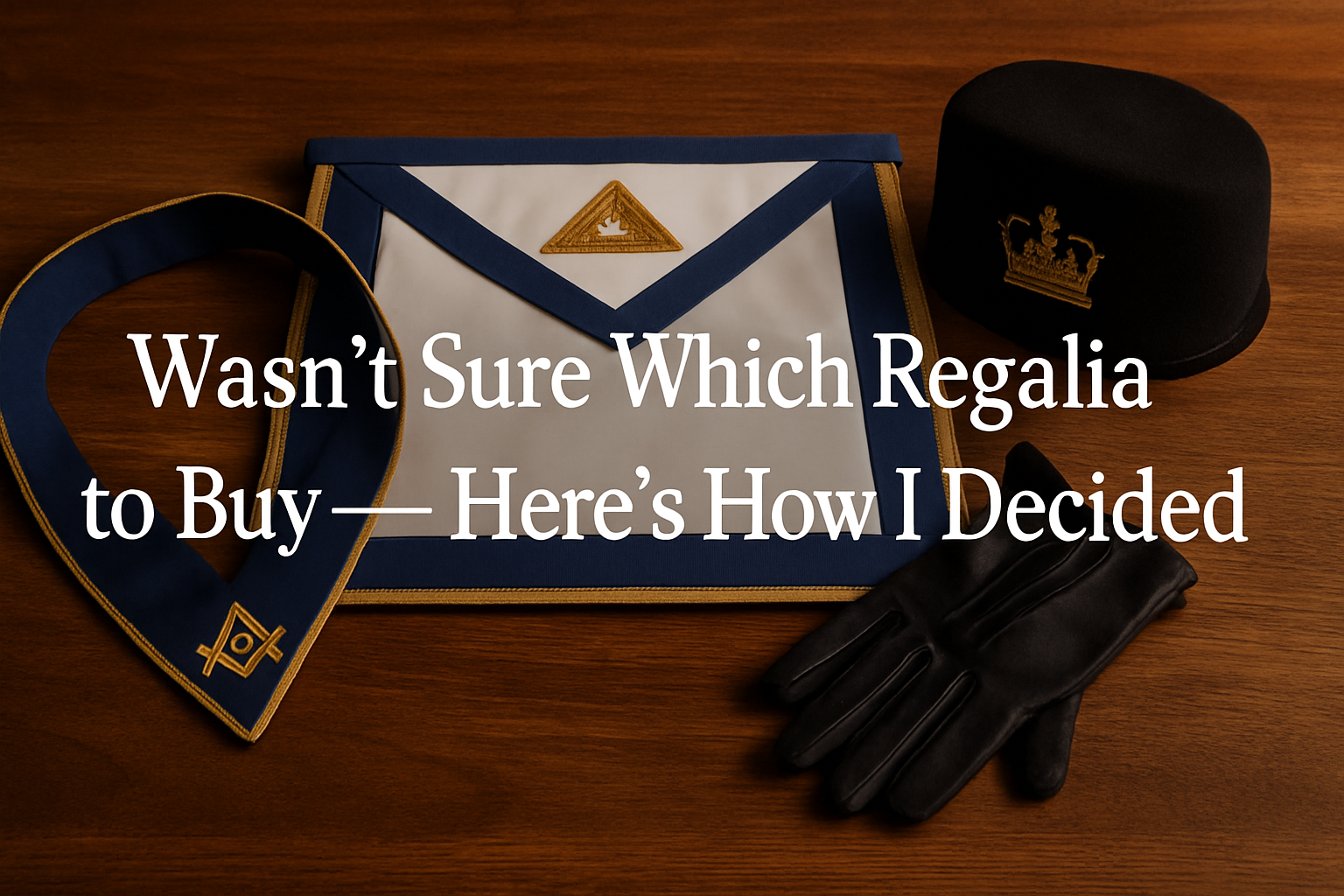
Wasn’t Sure Which Regalia to Buy — Here’s How I Decided

uying your first Masonic regalia can feel overwhelming. I remember staring at all the different aprons, collars, and sashes and asking myself, "What Masonic regalia do I need?" I didn’t want to make a mistake, especially when tradition and symbolism hold so much meaning. This blog will walk you through everything I learned during my decision-making process — from research and expert advice to my final purchase. If you're a new Freemason or someone looking to upgrade, this detailed guide is just for you.


Understanding What Masonic Regalia Is

What Does “Regalia” Mean in Freemasonry?

Masonic regalia refers to the traditional garments, symbols, and accessories worn by Freemasons during lodge meetings and ceremonies. This includes aprons, collars, gloves, sashes, and jewels. Each item has deep symbolic meaning, reflecting a Mason's rank, role, or degree.

The Symbolic and Practical Purpose of Masonic Attire

Freemason attire explained simply: it's a blend of symbolism, tradition, and identification. Regalia signifies rank, achievements, and one’s journey within the fraternity. It also promotes uniformity during rituals.

Why Every Degree Requires Different Regalia

Different degrees in Masonry come with distinct responsibilities and symbolism. The Entered Apprentice (EA), Fellowcraft (FC), and Master Mason (MM) each require different aprons and jewels to distinguish their roles.


Different Types of Masonic Regalia Explained

Aprons

  • Entered Apprentice: Basic design, often plain white.

  • Fellowcraft: Slightly more detailed, showing progression.

  • Master Mason: Intricate symbols with blue edging.

  • Past Master: Symbolic of experience and leadership.

  • Provincial and Grand Lodge: Highly detailed and often customized.

Explore Apron Cases to protect your valuable regalia.

Sashes, Collars, Jewels, Gloves, Hats, and Gauntlets

These accessories complete the uniform and differ by rank and order. Gloves signify purity. Jewels represent office or achievement. Sashes and collars are rich with meaning.

Regalia for Different Masonic Bodies

  • Craft Lodge (Blue Lodge)

  • Royal Arch

  • Knights Templar: Full uniforms available at Trendwall Shop

  • Scottish Rite

Shop All Masonic Crowns and Fez Caps for appendant bodies.


How Masonic Rank and Degree Influence Regalia

Matching Regalia to Your Degree

One of the biggest questions I had was: "How do I know which Masonic regalia is right for my rank?" Always check your lodge guidelines and only wear regalia suitable to your current degree.

Avoid Buying the Wrong Apron

Many first-time buyers mistakenly purchase higher-degree aprons. I almost did the same. Consult senior brethren or your lodge secretary.

When to Upgrade Your Regalia

Progression in Masonry is both symbolic and literal. As you advance, you should upgrade your regalia to reflect your growth. Consider this a rite of passage.


Common Mistakes When Buying Masonic Regalia

  • Buying before understanding lodge dress codes

  • Prioritizing style over symbolism

  • Choosing low-quality items for short-term savings

  • Not checking sizing and returns policy (especially online)

These are the same mistakes I almost made until I turned to a reliable regalia buying guide.


Material, Craftsmanship & Quality Differences

Types of Fabric

  • Lambskin: Traditional and premium

  • Leather: Durable and classic

  • Synthetic: Affordable but less authentic

Embroidery

  • Hand-embroidered: Superior craftsmanship and durability

  • Machine-embroidered: Economical for beginners

Signs of High-Quality Regalia

  • Tight stitching

  • Quality lining

  • Metal (not plastic) jewels

  • Symbol accuracy


Custom vs Standard Regalia: Which One to Choose?

Pros of Custom Regalia

  • Personalization (name, lodge number, rank)

  • Unique and symbolic

  • Excellent fit and representation

When Standard is Enough

Standard items are suitable for beginners or those on a budget. Trendwall Shop offers both standard and personalized regalia.

Personalization Options

You can opt for embroidered lodge names, dates, or meaningful symbols for your Masonic apron. Consider a custom Masonic apron purchase.


Where to Buy Regalia: Online vs Local Stores

Online

Pros:

  • Wider variety

  • Easy comparisons

  • Access to reviews

Cons:

  • Risk of poor quality

  • Sizing issues

Trusted Online Supplier

I chose Trendwall Shop because it offers:

Things to Check

  • Return and exchange policy

  • Product materials

  • Customer reviews

  • Delivery time


Cost Considerations: What Should You Expect to Pay?

Basic vs Premium

  • Basic Apron: $30 - $60

  • Premium Handcrafted: $100 - $300

Is Expensive Worth It?

Yes, for long-term use, better presentation, and respect to the craft.

Budget Tips

  • Buy gradually

  • Prioritize essentials first

  • Consider regalia sets

Shop Freemason regalia and compare Masonic regalia for all budgets.


FAQs for First-Time Buyers

“How do I know which Masonic regalia is right for my rank?”
Check your current degree and ask senior brethren or lodge secretary.

“What’s the difference between various Masonic aprons or sashes?”
Each symbolizes a rank or office; design and embroidery vary.

“What should I look for when buying regalia online?”
Authenticity, materials, seller reviews, and return policies.

“Do different lodges require different regalia styles?”
Yes, consult your lodge to ensure you meet dress code expectations.

“Can someone recommend a good place to buy affordable Masonic regalia?”
I highly recommend Trendwall Shop for both price and quality.

“I’m new to Freemasonry — what regalia did you get first?”
An Entered Apprentice apron and gloves.

“Did anyone else feel overwhelmed choosing their regalia?”
Absolutely, I did too. Research and guidance helped immensely.

“Did you buy your regalia set all at once or piece by piece?”
I started with essentials and built my collection gradually.

“Should I go for a full regalia set or buy items individually?”
Depends on your budget. Sets offer better value, but individual items allow personalization.

“Do quality and price really matter when it comes to Masonic gear?”
Yes, better quality means durability and respect to Masonic values.


My Personal Journey: How I Chose My Regalia

Initial Confusion

I searched "how to pick Masonic regalia" and ended up confused by the range. I wanted to respect tradition without overspending.

Advice From Brothers

Senior members guided me with tips for Masonic regalia selection, showing me differences in regalia materials and importance of symbolism.

Final Decision

I chose a Master Mason apron from Trendwall Shop for its traditional design, leather material, and clear symbolism.


Tips for First-Time Buyers

  • Always consult your lodge before buying

  • Start with essentials (apron, gloves)

  • Confirm measurements

  • Choose quality over cheap materials

  • Use a checklist to track what you need

Checklist for New Masons:


Conclusion

Choosing Masonic regalia can be confusing, but it’s a rewarding journey. From learning about Masonic apron types to understanding what to wear to lodge meetings, every step matters. Whether you prefer custom vs standard regalia, or traditional vs modern Masonic regalia, make your purchase a reflection of your journey. Trustworthy sources like Trendwall Shop make it easy to find regalia for different Masonic ranks with confidence.

Continue Reading

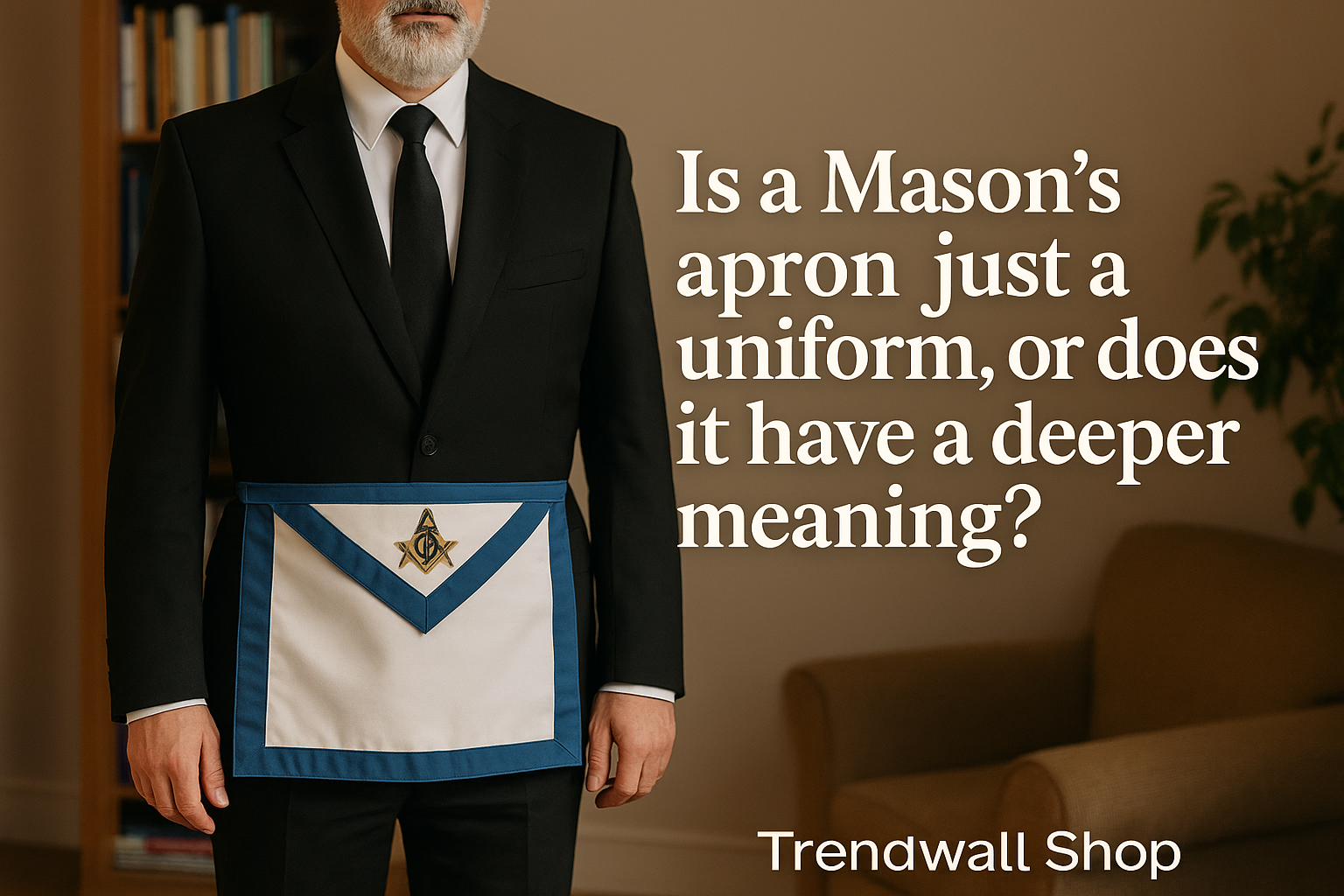
The Symbolism and Sacred Meaning of the Mason's Apron

When someone asks, "Is a Mason's apron just a uniform, or does it have deeper meaning?" — the answer reveals layers of tradition, spiritual symbolism, and personal legacy. This seemingly simple garment is the cornerstone of Masonic attire, loaded with meaning that spans centuries.

At Trendwall Shop, we don't just sell Masonic regalia — we honor its story. Let’s explore the profound truth about the Freemason’s apron.


The Historical Origins of the Masonic Apron

Long before Freemasonry became a speculative fraternity, operative stonemasons in medieval Europe wore aprons to protect themselves from stone, dust, and tools. These leather aprons served a practical purpose — shielding the craftsman.

As Masonry transitioned from operative to speculative during the 17th century, the apron transformed into a symbolic garment. It began representing purity, moral conduct, and the work each Mason does on their "spiritual temple."

Today, Freemasonry symbolism explained through the apron continues to bridge ancient craft with modern moral philosophy. The history of Masonic aprons connects physical labor with spiritual development.


Why the White Lambskin Apron Is Considered Sacred

Among all Masonic regalia, the white lambskin apron is the most treasured. It symbolizes innocence, purity, and truth — qualities central to a Mason's journey.

Lambskin has been traditionally associated with sacredness and sacrifice. In Freemasonry, the white lambskin apron meaning reflects the moral and spiritual cleanliness a Mason strives for. It's often presented as a first gift — a symbol of initiation and a lifelong reminder of Masonic teachings.

Explore Handcrafted Lambskin Aprons at Trendwall Shop.


How Masonic Apron Designs Reflect Rank and Role

In Freemasonry, symbolism is rich — and the apron’s design tells a story of progression.

  • Entered Apprentice (EA): Plain white apron with a simple flap.

  • Fellowcraft (FC): Apron may include blue trims.

  • Master Mason (MM): Apron with blue borders and rosettes, more decorative.

Senior members may have embroidered symbols, gold trim, or custom features. Some carry their aprons in dedicated Apron Cases to protect their regalia.

Want to own an apron that reflects your rank? Buy Masonic apron online from Trendwall Shop — where quality meets tradition.


The Deeper Esoteric Meaning Behind the Apron

The spiritual meaning of Masonic regalia extends far beyond the fabric. Masons view the apron as a symbol of inner work, personal transformation, and building character.

Just as operative masons built cathedrals, speculative masons build virtues. The apron becomes a reminder of that spiritual construction.

Masonic teachings emphasize:

  • Self-discipline

  • Moral integrity

  • Commitment to truth

This esoteric meaning of Masonic attire guides members toward higher moral standards.


The Apron in Masonic Rituals: More Than Just Clothing

Masonic lodge rituals place great importance on the apron. It is not worn casually but is given during formal initiation ceremonies.

  • At initiation, the Entered Apprentice receives the white lambskin apron.

  • As a Mason advances, his apron evolves, representing spiritual growth.

Each step in the ritual adds depth to what the Mason’s apron represents — both symbolically and emotionally.

The ritual importance of Masonic apron showcases the central role it plays in teaching Masonic values.


Apron Symbolism Across Different Masonic Rites

Across various rites, the apron design and meaning slightly vary:

  • Blue Lodge: Classic white lambskin, sometimes with blue trim.

  • Scottish Rite: More decorative, often includes symbolic embroidery.

  • York Rite: Aprons may include red accents or distinctive crosses.

Looking to explore higher degrees? Our Knight Templar Uniforms and Scottish Rite Collars are handcrafted with detail.


FAQs: Understanding the Mason’s Apron

What is the meaning of a Mason’s apron?
It represents innocence, truth, and the moral responsibility of building one's character.

Why do Freemasons wear aprons?
As a symbolic connection to operative masonry and a reminder of personal moral duties.

What does the design of a Masonic apron represent?
The design reflects the Mason’s rank and the values associated with each degree.

What’s the symbolism behind a Freemason’s apron?
Spiritual growth, purity, and the lifelong journey of self-improvement.

Does the apron represent anything spiritual or philosophical?
Yes, it’s seen as a spiritual tool that symbolizes inner refinement and personal truth.

Why do Masons say the apron is the most important piece of regalia?
Because it’s the first regalia received and holds emotional, historical, and symbolic value.


Comparing the Masonic Apron to Religious and Cultural Symbols of Purity

Many cultures use clothing to signify sacredness — from priestly robes in Christianity to ceremonial garments in Buddhism. The Masonic apron parallels these symbols of purity, representing a spiritual standard.

Just like robes are worn during rituals, the apron in Freemasonry has specific use in rites and ceremonies, adding sacred meaning to the act of wearing it.


Masonic Teachings: What the Apron Tells About the Journey of a Man

The apron narrates a man’s growth:

  • Entering the craft with innocence

  • Gaining wisdom through rituals

  • Earning honors through service

These stages reflect the journey from Entered Apprentice to Master Mason, and beyond.

The lessons learned are echoed in every fold and thread of the apron.


Why Freemasons Treasure Their First Apron for Life

Ask any Freemason about his first apron, and you’ll likely get an emotional response. It’s the first visible token of his Masonic journey.

For many, it becomes a family heirloom, passed down through generations. Some keep it in pristine condition inside Apron Cases as a symbol of legacy.


How Non-Masons Perceive the Apron vs. Its True Meaning

To outsiders, the apron may look like mere ceremonial attire. But to Masons, it represents ethical conduct, spiritual elevation, and fraternity.

This disconnect is often bridged by education — explaining that Masonry and symbolism are deeply intertwined.

We aim to educate non-Masons with clarity and respect at Trendwall Shop.


The Role of the Apron in Masonic Identity and Legacy

Freemasonry is not just a fraternity — it's a lifelong identity. The apron plays a central role in this.

  • Worn with pride during lodge meetings

  • Preserved as a legacy for family

  • Symbolizes values lived daily

Aprons are often gifted, displayed, or buried with the Mason as a final mark of honor.


Freemasonry and the Language of Symbols: The Apron as a Central Emblem

In the symbolic universe of Freemasonry, every item holds meaning. But the apron is central.

It communicates:

  • Moral teachings

  • Dedication to virtue

  • Connection to the craft’s ancient roots

For Masons and collectors alike, our Embroidered Masonic Aprons reflect timeless values.


Unpacking Masonic Regalia: Why the Apron Comes First

From Fez Caps to Collars and Sashes, regalia is vast. But the apron always comes first.

It’s:

  • The first regalia given

  • Symbolically tied to initiation

  • Worn across all degrees

It holds unmatched spiritual and traditional weight.


The First Gift: Why the Apron Is the First Regalia Received

During initiation, when a man becomes an Entered Apprentice, he is gifted the apron. It’s his first connection to the craft.

This act carries deep symbolism — like a newborn given clothes for his new life. It marks the start of transformation.


Personal Reflection: What My Apron Means to Me as a Freemason

As a practicing Freemason for over a decade, I see my apron as more than a garment. It’s a mirror of my values, a shield of purpose, and a connection to thousands of Masons before me.

Every time I wear it, I remember:

  • My initiation

  • My mentors

  • The lessons I've learned

At Trendwall Shop, we honor that connection by offering regalia worthy of that legacy.


Conclusion: A Symbol That Transcends Fabric

The Mason’s apron is not just uniform — it’s a legacy. It symbolizes purity, personal transformation, fraternity, and moral purpose.

Whether you're newly initiated or a seasoned Master Mason, your apron connects you to a timeless brotherhood.

Want to begin or enhance your Masonic journey? Explore the complete collection of Masonic Aprons and Regalia at Trendwall Shop.


Continue Reading

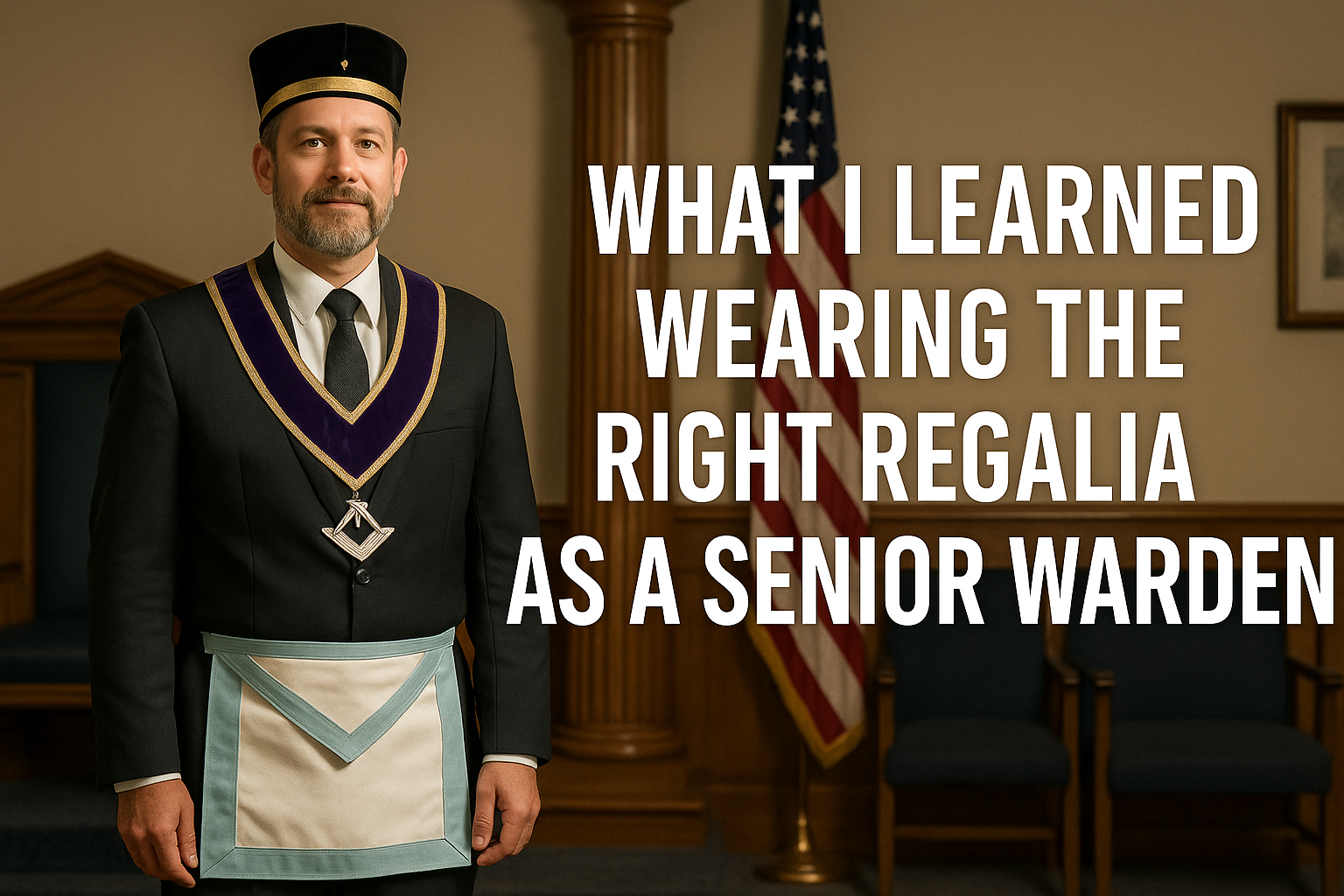
What I Learned Wearing the Right Regalia as a Senior Warden

Wearing the correct Masonic regalia for a Senior Warden is not just a matter of tradition — it's a deeply symbolic act that influences perception, identity, and leadership within the lodge. From my own journey in Freemasonry, I’ve come to understand that the regalia you wear not only represents your role but also shapes how you approach your duties and how others perceive you.

The Symbolic Meaning of the Senior Warden's Regalia

The regalia worn by a Senior Warden is rich in symbolism. The apron, jewel, and sash each represent balance, authority, and responsibility. The Senior Warden's jewel, for instance, is a symbol of maturity and strength, reflecting his pivotal role in lodge operations.

Wearing regalia correctly is essential to maintaining the lodge’s dignity. The apron significance in Freemasonry lies in its ability to remind every officer of his journey and progress.

Explore our premium collection of custom Masonic aprons to reflect your position with pride.

The Importance of Proper Regalia Etiquette

One of the most important lessons I learned early on was regalia etiquette in lodge. This includes understanding when and where to wear your regalia — such as during formal meetings, rituals, or ceremonies — and how to wear it with honor.

Following the Masonic dress code traditions shows respect for the craft and ensures uniformity across all brethren.

Carrying and storing your regalia properly is equally important. I recommend using a quality apron case to keep it protected between meetings.

Feeling the Weight of Responsibility

The moment I first donned my Senior Warden regalia, I felt a noticeable shift. The weight of the garments mirrored the duties of a Senior Warden in Freemasonry — it reminded me that this was no longer about personal achievement, but about serving the lodge.

This experience taught me that the regalia is more than just symbolic regalia in Freemasonry — it's a wearable oath to uphold the values of the fraternity.

Respecting Tradition and Uniformity

Uniformity plays a huge role in maintaining lodge identity. Wearing the correct regalia for lodge officers reinforces tradition and encourages respect among brethren.

I came to appreciate how consistency in attire builds a strong visual identity. For example, our line of Masonic crowns and temple-style caps perfectly align with this ideal.

The Psychological Shift: Identity and Presence

Each time I wore my regalia, I noticed a psychological shift. It was no longer “me” walking into lodge — it was the Senior Warden. That subtle change in presence came from the attire.

Putting on the correct regalia gave me confidence, a sense of duty, and clear identity as a Freemason officer. That transformation doesn’t happen overnight, but it becomes second nature as you internalize your role.

Avoiding Common Mistakes with Regalia

In the beginning, I made some classic Masonic regalia mistakes to avoid:

  • Wearing my apron too low or too high

  • Not positioning the jewel properly

  • Forgetting the proper way to fold or store my sash

Thankfully, mentors helped me correct these early. Listening to seasoned brethren and learning the unwritten rules was critical. If you're unsure, never hesitate to ask. It saves embarrassment and shows you care.

How Regalia Reflects Hierarchy and Progression

In Freemasonry, regalia is a visual map of rank and role. As Senior Warden, you sit just below the Worshipful Master — and your attire reflects that.

This lodge hierarchy symbolism isn’t just about status; it's about earned trust and responsibility. Seeing the jewel or sash of another officer reminded me that everyone has walked a unique path of service and learning.

You can browse Knight Templar uniforms to see how visually striking and meaningful each rank’s regalia truly is.

Connecting with the History Behind the Regalia

Researching the history of Masonic attire opened my eyes to its depth. From ancient stonemason practices to modern lodges, the continuity of symbols is powerful.

Wearing regalia today connects us to generations of Masons who came before. Learning about the historical and cultural roots brought a deep sense of purpose.

Check out our historically inspired French regulation collar — a great example of timeless tradition.

Preparing for Rituals with Intention

One major takeaway was the importance of preparing for rituals with intention. Putting on regalia should be a mindful act, not a rushed habit. It’s a moment to center yourself and remember why you're there.

This small ritual helped me focus, calm nerves, and step into my leadership role with clarity.

Receiving Guidance from Senior Members

Perhaps the most helpful lessons came from senior members and mentors. They helped me understand the nuances of Masonic dress and regalia protocol during lodge meetings.

They also reminded me that wearing regalia with honor isn’t about pride — it’s about humility and dedication.

If you’re new or about to become a Senior Warden, you can explore affordable Masonic regalia sets or invest in handmade Masonic aprons tailored to your lodge needs.

FAQ: Regalia Questions Answered

What is the correct regalia for a Senior Warden?
A Senior Warden typically wears a specific apron, collar with the level jewel, and may include a sash depending on jurisdiction.

Do Senior Wardens wear different regalia in different jurisdictions?
Yes, while symbolism remains consistent, design and color can vary slightly based on Grand Lodge customs.

What makes Senior Warden regalia unique compared to other lodge officers?
The jewel (Level) and apron trim usually distinguish it, representing balance and support to the Worshipful Master.

How did you feel when you wore your Senior Warden regalia for the first time?
It felt humbling and empowering, like stepping into a respected lineage of leadership.

Did wearing the right regalia change how others in lodge viewed you?
Absolutely. It signals readiness and earns quiet respect from brethren.

Have you ever worn the wrong regalia by mistake?
Once early on — thankfully, a kind Past Master corrected me quickly and respectfully.

I’m about to be installed as Senior Warden — what regalia do I need?
You’ll need a proper apron, collar and jewel — see our Senior Warden apron collection for curated options.

Any tips on where to buy high-quality Senior Warden regalia?
Yes — Trendwall Shop offers premium Masonic officer jewels, sashes, and crowns made for every lodge officer.


Final Thoughts: What I Gained from Wearing Regalia

Wearing the correct regalia as a Senior Warden changed how I led, how I learned, and how I saw the craft. It wasn’t just about fulfilling duties — it was about embodying the spirit of Freemasonry.

Whether you’re looking to buy personalized Freemason regalia or just starting your journey, take the time to understand the deeper meaning. When you wear it right, you don’t just look the part — you become the part.

Explore Trendwall Shop for the best regalia for lodge officers and start your leadership journey with authenticity, respect, and pride.

Continue Reading

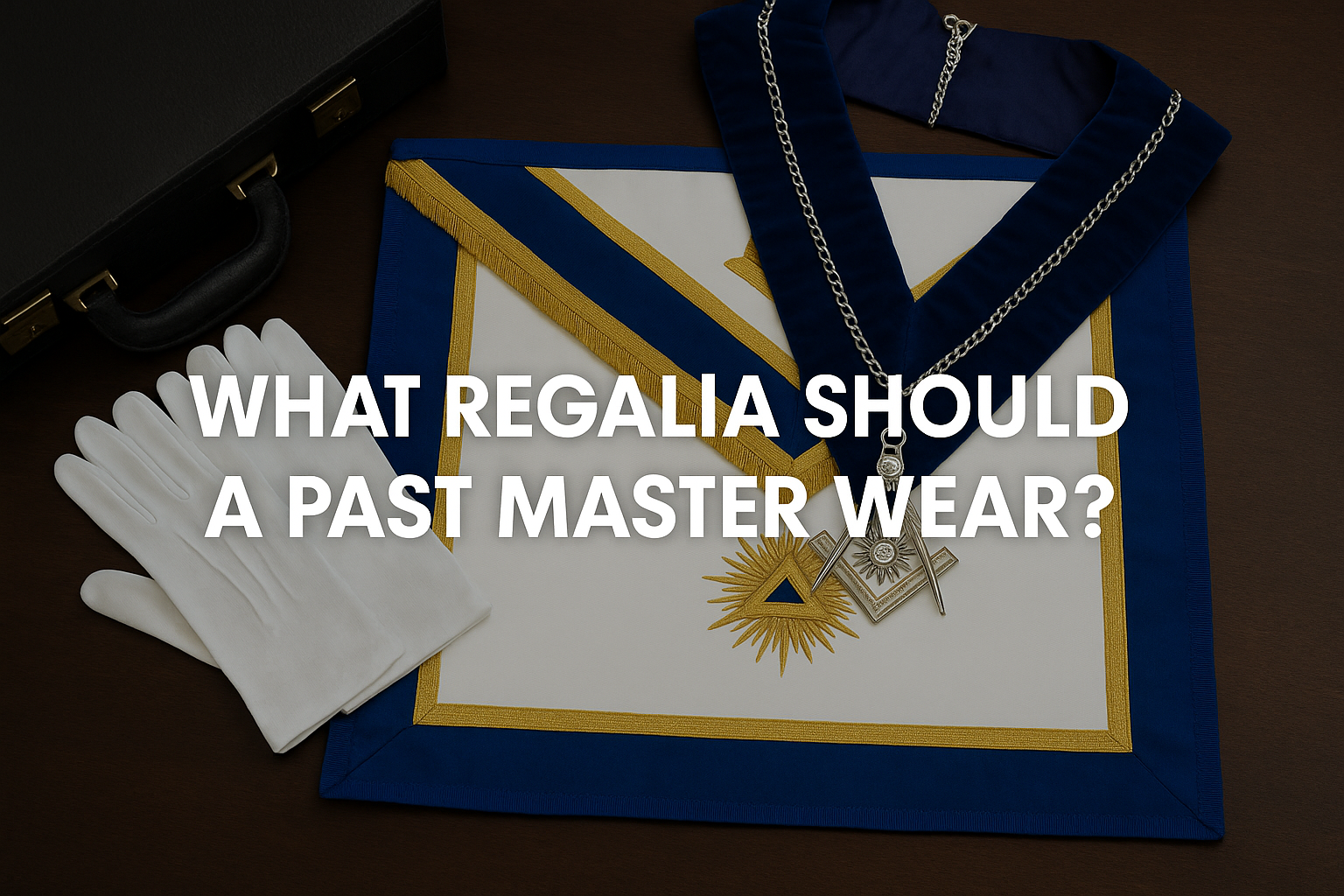
What Regalia Should a Past Master Wear?

Here’s What You Need to Know

Freemasonry honors tradition, symbolism, and structured ranks. One of the most visually distinctive roles is that of the Past Master. Many ask, what does a Past Master wear? This guide will answer that and more, combining tradition, product recommendations, and expert insight to help you understand and acquire the right regalia.


Who is a Past Master in Freemasonry?

A Past Master is a Brother who has completed his term as Worshipful Master of a Masonic Lodge. This role is highly respected and symbolizes leadership, service, and dedication.

Key Highlights:

  • A Past Master is part of the Masonic hierarchy, often acting as a mentor to incoming officers.

  • Past Masters may hold advisory roles and assist in rituals or ceremonies.

  • Their regalia reflects this earned honor and tradition.

Expert Opinion: "The office of Past Master carries an enduring prestige. The regalia is more than clothing; it represents legacy." — R.W. Bro. Daniel Marks, PM, Lodge of Truth No. 298


Meaning and Significance of Past Master Regalia

Past Master regalia is deeply rooted in symbolism. It conveys honor, knowledge, and authority within Freemasonry.

Symbolic Significance:

  • Represents completion of leadership term

  • Reflects continued Masonic tradition and service

  • Denotes authority during ceremonies

Past Master Masonic symbolism often includes the sunburst, compass and square, and specific collar and jewel designs that differ from active Worshipful Masters.


Components of Past Master Regalia

Here are the primary elements of a Past Master’s regalia:

Essential Items:

Looking for a full set? Browse authentic Past Master Regalia sets


Design Features of the Past Master Apron and Jewel

Design is crucial in Past Master regalia. Aprons typically feature:

  • Blue border trim (signifying Blue Lodge roots)

  • Gold embroidery and intricate sunburst motif

  • A distinct Past Master Jewel, incorporating a quadrant or compass with rays of the sun

Embroidered Past Master apron options can be found here


Differences in Regalia by Jurisdiction

Freemasonry varies across countries and jurisdictions. Here’s how:

JurisdictionApron StyleCollar DifferencesJewel Style
UGLE (UK) White lambskin, blue trim Simple chain collar Compass with quadrant
US Lodges Elaborate embroidery Velvet or ribboned collar Sunburst jewel
Prince Hall More colorful elements Sometimes includes sashes Often includes initials

Always consult your Grand Lodge guidelines for exact details.


Occasions When Past Masters Wear Their Regalia

Past Master regalia is not worn casually. It's reserved for formal and ceremonial occasions:

  • Installation ceremonies

  • Lodge anniversaries

  • Public processions

  • Dedication events

Understanding when to wear Masonic regalia is part of respectful lodge participation.


Protocol and Etiquette for Wearing Past Master Regalia

Masonic etiquette plays a key role in regalia use.

Key Points:

  • Wear only during authorized lodge events

  • Do not mix elements (e.g., Past Master collar with Worshipful Master apron)

  • Follow dress code: white gloves, dark suit, proper footwear

Masonic apron etiquette and dress code reflect respect for tradition and Lodge order.

Expert Note: "Etiquette ensures unity. Proper regalia shows dedication to our Craft." — Bro. Allen Wright, Lodge Education Officer


Where to Purchase Authentic Past Master Regalia

Buying genuine Masonic items requires care.

Considerations:

  • Authenticity

  • Jurisdiction compliance

  • Craftsmanship

Shop online with trusted suppliers like Trendwall Shop. We offer:

Explore our full Freemason collection here


Historical Evolution of Past Master Regalia

Over centuries, Past Master ceremonial attire evolved in:

  • Design: From simple to elaborate embroidery

  • Symbolism: From basic symbols to rich emblems

  • Materials: From cotton to silk and velvet

Collectors and historians appreciate antique aprons and 18th-century regalia, often displayed in Masonic museums.


FAQs: Past Master Regalia (AEO Friendly)

What’s the difference between a Master’s regalia and a Past Master’s regalia?
Past Master regalia typically includes a unique jewel (with sunburst) and may have a more elaborate apron design.

Can a Past Master still wear his Master apron at Lodge events?
Only if he’s currently serving as Worshipful Master. Otherwise, Past Master regalia should be worn.

Is Past Master regalia required in all jurisdictions?
Requirements vary. Check your Lodge’s jurisdiction rules.

Where can I buy quality Past Master regalia online?
Visit Trendwall Shop for affordable and custom options.

Do different Grand Lodges have different styles of Past Master aprons?
Yes. Styles and symbols may vary between jurisdictions like UGLE, Prince Hall, or US Grand Lodges.

Can I personalize or customize my Past Master apron?
Absolutely. Custom embroidery is available at many stores including Trendwall Shop.

What’s the correct jewel or emblem for a Past Master?
Usually the quadrant with rays (sunburst), sometimes with the square and compass.

Are there rules about when to wear Past Master regalia vs regular Lodge attire?
Yes, Past Master regalia is only for specific events; consult lodge guidelines.

Does a Past Master wear a different collar or sash?
Yes, typically a specific Past Master collar; sashes are not always used.

Can I wear my Past Master regalia in other Lodges or only in my own?
Often allowed in recognized Lodges, but check local protocols first.


Conclusion

Understanding what regalia a Past Master should wear helps preserve Masonic tradition and dignity. From the masonic past master apron meaning to knowing where to find affordable past master regalia, each detail contributes to your role in the Lodge.

Trendwall Shop offers premium, approved, and customized regalia that reflects your legacy. Browse our full Past Master collection and honor the craft with authenticity.

Continue Reading

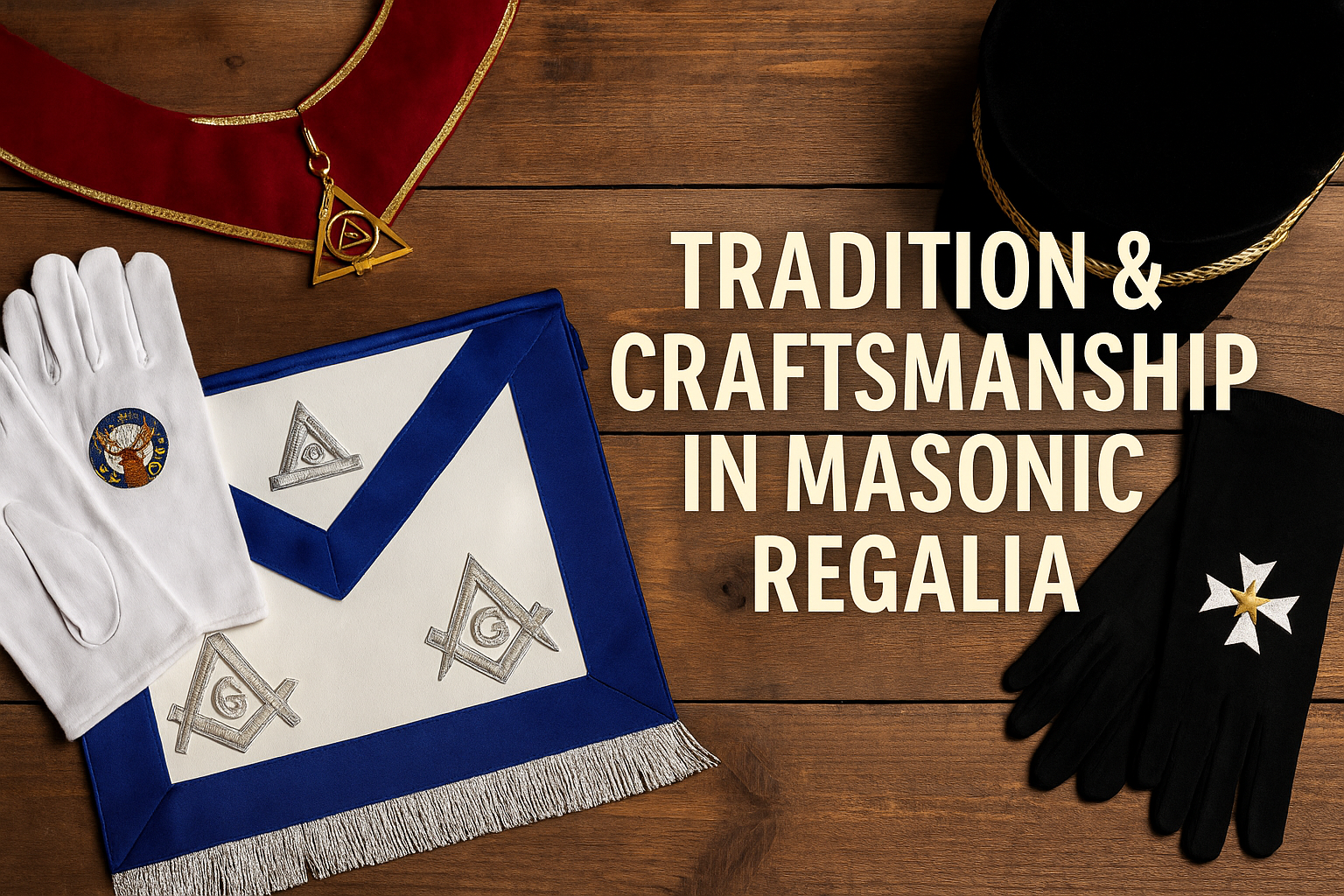
Tradition & Craftsmanship in Masonic Regalia

In Freemasonry, symbolism, tradition, and craftsmanship are cornerstones of identity. Every piece of regalia worn by a Mason holds meaning—reflecting centuries-old traditions and personal journeys. At Trendwall Shop, we are committed to delivering handcrafted Masonic regalia that not only meets ceremonial standards but also resonates with the rich heritage of the Craft.


Honoring Masonic Traditions with Every Stitch

Freemasonry is more than a fraternal order—it is a way of life. Masonic traditions date back hundreds of years, and the attire worn in lodges continues to reflect that legacy. From aprons to gloves and collars, each item represents virtues, rank, and responsibilities.

The Master Mason Blue Lodge Apron in Royal Blue with Silver Fringe exemplifies this tradition, blending timeless symbolism with elegant presentation.


Why Craftsmanship Matters in Masonic Attire

Every element of Masonic attire—from stitching to embroidery—matters. Masonic craftsmanship ensures that items are durable, dignified, and ceremonial-ready.

Our Past Master Blue Lodge Apron – White, Purple & Silver showcases refined embroidery and traditional color schemes. This kind of attention to detail allows each Brother to wear something that feels both personal and symbolic.


Meaning Behind Regalia and Symbols

Masonic symbolism is deeply rooted in history. Whether it's the compass and square, the all-seeing eye, or the level and plumb rule—each symbol speaks to Masonic values.

The Royal Arch Chapter Collar Jewel is an example of ceremonial Masonic regalia that highlights such symbols in an elegant and ceremonial form.


The Evolution of Masonic Attire

Masonic attire has evolved with time while maintaining its core identity. What was once hand-sewn by local artisans has now become accessible globally thanks to skilled manufacturers.

However, Trendwall Shop brings back the artisan touch with handcrafted regalia that pays homage to the past. Our Masonic Crowns offer a traditional yet regal look, showing how heritage in Freemasonry continues to be respected.


FAQ: Everything You Need to Know About Masonic Regalia

What makes Masonic regalia so important in Freemasonry?

Masonic regalia symbolizes rank, achievements, and spiritual ideals. It’s essential for maintaining the integrity and decorum of lodge rituals.

What kind of traditions are reflected in Masonic regalia?

Regalia reflects ancient moral values, leadership roles, and ritualistic symbolism passed down through generations.

How does craftsmanship play a role in creating Masonic items?

High craftsmanship ensures quality, durability, and accurate representation of Masonic symbols.

Why is it important to honor Masonic heritage through attire?

The attire is a physical expression of Masonic identity and upholds the dignity of the Craft.

Are there differences in regalia between Masonic lodges or countries?

Yes, there are stylistic and symbolic differences based on jurisdiction and lodge tradition.

Are these handmade or mass-produced?

At Trendwall Shop, many of our items are artisan-made to ensure authenticity and detail.

What materials do you use for your regalia?

We use premium fabrics, fine embroidery threads, and durable metals.

How is your regalia different from others available online?

We offer premium quality, historical accuracy, and handcrafted detail not often found in mass-market items.

Can I customize regalia to match my lodge’s tradition?

Yes! We offer custom Masonic regalia options tailored to your lodge’s needs.

Is this regalia suitable for official lodge ceremonies?

Absolutely. Our pieces are made to ceremonial standards with quality and tradition in mind.


Personalized Touch with Custom Regalia

Many Brothers prefer items that reflect their unique lodge or personal history. Custom Masonic regalia allows for personalized Freemason gifts and one-of-a-kind designs.

The Ladies Knight Templar Gloves in Black Cotton with Star Patch are a perfect example of personalized elegance that honors both tradition and individuality.


Heritage, Rituals, and Identity

Masonic rituals and dress go hand-in-hand. Wearing the correct Knight Templar Uniform or apron helps reinforce one's commitment to the Craft.

Additionally, our Elks of the World Cotton Gloves with Elk Head Clock make a unique yet meaningful addition for members involved in Elks or fraternal ceremonies.


Why Choose Trendwall Shop for Your Regalia?

At Trendwall Shop, we combine:

  • Artisan-made Masonic items

  • Accurate Masonic symbolism

  • Durable ceremonial Masonic regalia

  • Affordable pricing with premium feel

Whether you're looking to buy Masonic regalia or order lodge regalia for your next event, we ensure you receive a product that is both meaningful and majestic.

We also offer protective MM-WM apron cases and accessories that are tailored for convenience and ceremony.

Explore all options from fez caps to customized pieces on our main page: Trendwall Shop.


Comparative Insight

Compared to generic online stores, our handcrafted products offer:

FeatureTrendwall ShopOther Stores
Customization Available Yes Limited
Handmade Touch Yes Often Machine-Made
Ceremonial Grade High Moderate
Symbolic Accuracy Authentic May Vary
Materials Premium Mixed Quality

Final Thoughts

The meaning behind Masonic regalia extends far beyond fabric and embroidery. It’s about identity, heritage, and a timeless design that carries forward the principles of the fraternity.

With Trendwall Shop, you don't just wear regalia—you wear tradition, honor, and excellence. Choose traditional Masonic regalia online from the best Masonic regalia store that understands the depth of the Craft.


Conclusion

Freemasonry is built on centuries of symbolism, tradition, and excellence. At Trendwall Shop, we help you preserve this legacy through finely crafted regalia that reflects your journey and values.

Embrace your identity, wear your values, and honor your Craft with our affordable Masonic regalia sets. Let tradition meet craftsmanship—because your heritage deserves nothing less.

Continue Reading

Discover the Power of Full Masonic Regalia

In the world of Freemasonry, the apron is iconic. But Masonic regalia goes far beyond that. From crowns to collars, from embroidered aprons to ceremonial gloves—each piece has a deeper meaning and historic role in a Mason’s journey.

At Trendwall Shop, we take pride in offering high-quality, handcrafted regalia that speaks to tradition, honor, and identity. This article dives into the deeper meaning of regalia, how it evolves with rank, and why owning a complete set matters more than ever in today’s Masonic practice.


What Is Masonic Regalia and Why Does It Matter?

Masonic regalia is more than dress—it’s a living symbol of a Mason's beliefs, values, and duties. From the colors and materials to the placement of symbols, everything holds purpose. While the apron is the most recognized, many other elements shape the full ensemble:

  • Collars & sashes

  • Crowns or caps

  • Gloves

  • Jewel badges and medallions

These pieces represent honor, rank, degree, and commitment to the craft—becoming part of a Mason's personal and collective identity.

Beyond the Apron: Key Pieces of Regalia

Let’s explore some essential pieces beyond the traditional apron:

1. Collars and Sashes

Embroidered collars and sashes carry emblems representing the wearer’s office or degree.

2. Officer Aprons

Different ranks use unique aprons. A good example is the Senior Steward Officer Apron, adorned with navy velvet and silver embroidery.

3. Masonic Crowns and Headgear

Used in higher orders or ceremonies, headpieces mark authority and heritage.

4. Past Master Regalia

Past Masters often wear ornate pieces that reflect their service and wisdom.

5. Ceremonial Gloves

White gloves symbolize purity of intent and the Masonic value of clean hands in sacred work.


Personal Meaning of Regalia

Each Mason finds unique significance in regalia. It's about more than wearing uniform—it's about embracing legacy, living values, and participating in centuries-old traditions.

Wearing full ceremonial wear helps instill pride and respect during rituals. It also unifies brothers under a shared visual language.

The History of Masonic Clothing

The history of Masonic clothing stretches back centuries. While early regalia was simple and practical, today’s pieces are rich in symbolism and tradition. Evolution of Masonic regalia follows:

  • 18th Century: Practical aprons with little embellishment

  • 19th Century: More ornate designs with embroidered symbols

  • Modern Day: Functional yet meaningful items that balance tradition and elegance

These changes show how attire reflects the ever-deepening symbolism in Freemason dress.


FAQs: Answering Your Questions About Masonic Regalia

What does Masonic regalia include besides the apron?

Regalia includes collars, sashes, gloves, caps, crowns, and medals, each carrying specific symbolism.

Why is Masonic regalia important?

It expresses identity, honors tradition, and signals the Mason’s rank, duty, and role within the lodge.

What is the meaning behind different pieces of regalia?

Each item—from jewels to colors—symbolizes virtues, lessons, or historical roles in Freemasonry.

What’s the history behind Masonic regalia?

It evolved from simple trade aprons to elaborate ceremonial attire rich in symbolism and tradition.

Is every piece of regalia symbolic?

Yes, each holds symbolic meaning rooted in Masonic teachings and degrees.

Who can wear full Masonic regalia?

Only initiated Masons of corresponding degrees or offices can wear specific pieces.

Do all Freemasons wear the same regalia?

No, regalia varies based on jurisdiction, rank, degree, and lodge traditions.

What regalia is required for a lodge meeting?

Typically, an apron is required. Other regalia depends on the role (e.g., Master, Steward).

Does regalia change based on rank or degree?

Absolutely. Higher ranks and different rites involve specific items.

What does a Worshipful Master's regalia include?

It often includes an ornate apron, collar, gloves, and jewel symbolizing leadership.


Comparative Analysis: Regalia Across Ranks

RankRegalia ItemSymbolism
Entered Apprentice Basic Apron Purity, new beginnings
Fellowcraft Enhanced Apron Growth, learning
Master Mason Embroidered Apron, Jewel Wisdom, maturity
Past Master Regal Apron, Collar Leadership, honor
Knights Templar Cap, Sword, Tunic Protection, chivalry

Understanding regalia vs. apron helps highlight the broader spectrum of Masonic clothing.

Expert Opinion

"Regalia isn’t just clothing—it’s an identity. It reflects the moral lessons through regalia that every Mason carries. Whether entering your first lodge or being installed as Worshipful Master, every piece you wear echoes centuries of tradition."
Bro. Thomas L., 33° Scottish Rite Freemason

Personal Experience

When I wore the Master Mason Blue Lodge Apron Case for the first time, I felt a powerful connection to every brother who stood before me. That’s the Masonic uniform symbolism—it brings past, present, and future together in one moment.

Why You Should Own Full Masonic Regalia

If you’re only wearing an apron, you’re missing the full depth of the Craft. Full regalia:

  • Enhances ritual performance

  • Shows respect for tradition

  • Distinguishes your degree and role

  • Strengthens identity and unity

Whether you’re shopping for your first apron or a complete set, Trendwall Shop offers affordable Freemason regalia crafted with care.


Where to Shop High-Quality Regalia

At Trendwall Shop, we specialize in premium Masonic regalia that honors tradition. Browse our selection:

We are your trusted Masonic regalia supplier, providing both custom and ready-made pieces.


Conclusion

Masonic regalia is a cornerstone of Freemason culture. It's not just about attire—it’s about legacy, symbolism, and identity. By embracing full ceremonial wear, every Mason deepens their connection to the Craft.

Explore the full Masonic regalia set for sale online at Trendwall Shop—where tradition meets craftsmanship.

Continue Reading

The Journey of Your Masonic Regalia: From Design to Delivery

When you wear a piece of Masonic regalia, you're not just putting on clothing or jewelry—you're embracing centuries of tradition and meaning. At Trendwall Shop, we specialize in delivering premium Masonic regalia, ensuring that every item you order is not only beautiful and functional but also authentic, handcrafted, and symbolically rich.

Concept to Craft: The Regalia Design Process

Everything begins with a deep understanding of traditional Masonic symbolism. Our designers often consult with active Freemasons to ensure that every symbol, stitch, and color reflects Lodge-specific customs and significance. This personalized approach results in products like the Sentinel Masonic Apron with Green Velvet, crafted with a deep respect for heritage.

Expert Opinion:

"Freemasonry is rooted in symbolism. A well-designed apron or jewel must not only look elegant but communicate something deeper. It’s a language of its own," says Bro. Mark Peterson, Master Mason and regalia consultant.

Materials Matter: Sourcing and Selection

To ensure authenticity, we use only premium materials in all our pieces. From high-grade cotton in Knights Templar Commandery Gloves to velvet trims and gold-plated metals, every element plays a role in elevating the final product.

Our commitment to ethical and sustainable sourcing means working with trusted suppliers who understand the importance of quality and traceability.

Handcrafting Heritage: How Artisan Masonic Products Come to Life

Each item at Trendwall Shop goes through a detailed, handmade Masonic regalia production phase. This involves:

  • Cutting and Stitching: Done by skilled artisans to preserve uniformity

  • Embroidery: Emblems and symbols are embroidered using traditional techniques

  • Assembly: Precision work to combine various components into one seamless piece

This results in masterpieces like our Provincial Secret Monitor AMD Collarette, a perfect example of artisan Masonic products in action.

The Personal Touch: Customization and Lodge-Specific Detailing

One of the unique strengths of our store is our ability to offer custom Masonic items. Whether you need a custom Masonic apron for sale or a full Knight Templar uniform, we accommodate lodge-specific colors, ranks, and symbology.

We also create personalized Masonic gifts, such as embroidered aprons, monogrammed cases like our MM/WM Apron Case, or detailed Masonic crowns for ceremonial use.

Step-by-Step: Your Masonic Product's Journey

  1. Design Consultation: Tailored to your Lodge

  2. Material Selection: Sustainable and symbolic

  3. Craftsmanship Begins: Handmade in our workshop

  4. Quality Control: Every item inspected thoroughly

  5. Packaging: Secure and elegant

  6. Shipping: Delivered with care and tracking

FAQs: Everything You Want to Know About Masonic Product Craftsmanship

How are Masonic products actually made from start to finish?

Each product goes through a multi-step process: concept design, material sourcing, handcrafting, quality checks, and secure delivery.

What goes into the design of a Masonic apron or ring?

Symbolism, Lodge traditions, and color meanings are core considerations.

Who designs Masonic regalia — are they Freemasons themselves?

Many of our designers work closely with or are Freemasons, ensuring authenticity.

Is the design process based on specific Lodge traditions or symbolism?

Yes, every Lodge has unique customs that we respect in every design.

Are Masonic products handmade or mass-produced?

They are largely handmade to maintain quality and authenticity.

What materials are used to ensure authenticity?

We use velvet, cotton, real leather, and gold-plated metals.

How do you maintain quality throughout the production process?

With multiple checkpoints and expert reviews from experienced Masonic consultants.

Is there any ethical or sustainable sourcing involved?

Yes, our supply chain is designed around ethical labor and material sourcing practices.

Quality Control: A Commitment to Excellence

Before any piece is sent out, it undergoes strict quality control in Masonic products. Our workshop ensures every stitch and emblem is placed perfectly, maintaining consistency across all orders—whether it’s a simple glove or a grand Royal Select Masters Officer Collar Jewel.

Why Choose Trendwall Shop for Your Regalia?

  • Lodge-Approved Masonic Merchandise

  • Made-to-Order Masonic Gear

  • Best Quality Masonic Regalia at fair prices

  • Secure online ordering and easy customization

  • Variety of regalia from fez caps to officer aprons

We understand that Freemasonry is a journey, and your regalia should reflect that. Every product at Trendwall Shop is a token of dedication, history, and pride.

Comparative Insight: Mass-Produced vs. Handcrafted Regalia

FeatureMass-ProducedHandcrafted (Trendwall Shop)
Quality Inconsistent Consistently High
Customization Limited Full Custom Options
Symbol Accuracy Often Generic Lodge-Specific & Accurate
Durability Basic Long-Lasting

Final Thoughts: A Legacy Woven in Every Thread

From design sketches to your doorstep, the journey of a Masonic product at Trendwall Shop is a story of freemason product creation infused with heritage and care. Whether you're buying for yourself or a fellow Brother, you're investing in premium Masonic supply that honors the craft.

Start your journey with us today at Trendwall Shop.

Conclusion

Masonic regalia is more than fabric and metal—it's meaning, ritual, and legacy. At Trendwall Shop, we ensure that your item is thoughtfully created, expertly crafted, and ethically delivered. Trust us to bring your heritage-inspired Masonic designs to life.

Continue Reading

Ensuring Quality & Authenticity in Every Masonic Piece

When it comes to Masonic regalia, quality and authenticity are not just features — they’re a matter of honor and heritage. At Trendwall Shop, we combine traditional Masonic craftsmanship with modern quality control to ensure each product reflects the true values of Freemasonry.

Whether you're looking to buy authentic Masonic regalia or explore premium Masonic products for your lodge, this guide takes you behind the scenes of our meticulous crafting process.


Why Quality Matters in Masonic Regalia

Freemasonry is built on tradition, symbolism, and discipline. Each item — whether it's an apron, collar, jewel, or fez — carries significant meaning. That’s why we go above and beyond to ensure:

  • Accurate Masonic symbols

  • High-grade, authentic Masonic materials

  • Durable craftsmanship that stands the test of time

Our lodge-approved Masonic gear is more than regalia — it's a statement of commitment.


Step-by-Step: How We Ensure Quality in Every Piece

1. Material Selection

We use ethically sourced, top-grade materials. From leather gloves to wool-blend capes, we only work with materials that offer longevity and authenticity.

2. Precision in Design

Each item is crafted with strict adherence to historical accuracy in Masonic items and precision in Masonic design. We avoid shortcuts, ensuring each symbol, stitch, and seam is aligned to tradition.

3. Skilled Artisans

Our artisans bring years of experience in artisanal Masonic manufacturing. Their dedication ensures that every stitch reflects care and precision.

4. Multi-Stage Quality Control

We implement a quality control in Masonic products workflow that includes:

  • Material integrity checks

  • Symbol accuracy inspection

  • Regalia quality testing

  • Final manual inspection before packaging

5. Testing for Durability

We ensure durable Masonic items through wear-and-tear simulations, particularly for items like gloves, aprons, and cases.


Our Promise: Ethical & Authentic

We follow an ethical Masonic production approach. Each product meets Masonic regalia production standards, ensuring your purchase supports both tradition and transparency.


Expert Insight

"As a former Worshipful Master and artisan, I know the value of regalia that feels and looks authentic. Trendwall Shop’s attention to detail and symbolic integrity is unmatched in today’s market." — Brother James, Lodge #146


Personal Experience: A Customer’s View

"I was skeptical about ordering online until I tried Trendwall Shop. The genuine Masonic apron I ordered came with flawless embroidery, and the stitching was superior to anything I’ve seen locally. It felt like wearing history."


Comparative Analysis

FeatureTrendwall ShopMass Market Retailers
Handmade Yes Rare
Quality Assurance Multi-step checks Inconsistent
Symbol Accuracy Verified by Masonic references Often generic
Lodge Approval Frequently approved Unverified
Customization Available Yes No

FAQs: About Our Quality Standards

How do you verify the quality of your Masonic regalia?

We conduct multi-stage inspections, including material checks and symbol accuracy verification.

Are your products handmade or mass-produced?

All products are handmade Masonic accessories by skilled artisans.

What materials do you use for aprons, collars, and jewels?

We use authentic Masonic materials like leather, silk, wool blends, and gold-plated metals.

How long does a typical Masonic item last?

With proper care, our high-quality Masonic regalia can last many years.

Is there a warranty or satisfaction guarantee on the products?

Yes, we offer satisfaction guarantees and exchanges.

How can I be sure the Masonic products are genuine?

Our items follow traditional Masonic craftsmanship guidelines and are approved by lodges.

Do you follow official Masonic guidelines or symbols when crafting regalia?

Absolutely. Symbol placement and design adhere strictly to Masonic symbols accuracy.

Are your items approved by any Masonic lodges or bodies?

Yes, many of our customers are active members and officers who vouch for our authenticity.

What makes your Masonic items different from cheaper ones online?

We offer premium Masonic regalia for lodges with verified materials, handmade quality, and accurate symbols.


Order with Confidence

Looking to order handcrafted Masonic items or shop real Masonic jewelry?

Explore the full range at Trendwall Shop


Conclusion: Tradition Woven with Trust

At Trendwall Shop, we don’t just sell regalia — we preserve tradition. With custom Masonic pieces online crafted to the highest standards, your investment in authenticity is secure.

Choose Trendwall Shop — your trusted Masonic gear supplier.

Continue Reading

Shipping Masonic Regalia Globally: Your Complete Guide

Shipping ceremonial Masonic regalia internationally is not just about putting items in a box—it requires care, knowledge, and reliable logistics. Whether you're a Freemason ordering from abroad or a lodge looking to ship regalia across continents, this guide by Trendwall Shop covers everything you need to know about global Masonic regalia logistics.


Why International Shipping for Masonic Regalia Matters

Freemasons across the globe uphold shared traditions. Masonic regalia—like aprons, collars, gloves, and crowns—are essential symbols of that fraternity. When ordering from countries like the USA, UK, or Canada to lodges in Europe, Africa, or Asia, secure, efficient, and respectful shipping is crucial.

Expert Opinion: “Precision and respect in packaging reflect the sacredness of Masonic items,” says a logistics expert from Trendwall Shop. “It's not just product delivery—it’s the transportation of heritage.”


Step-by-Step: How We Ship Masonic Regalia Internationally

1. Product Selection with Worldwide Shipping in Mind

Start by choosing Masonic items that are ready for safe international transport. At Trendwall Shop, we ensure products are quality-checked and designed with durability in mind.

Popular internationally shipped items include:


2. Packaging for Ceremonial Regalia

When shipping fragile or symbolic items, presentation and protection are key. Trendwall Shop uses:

  • Double-layered padded wrapping for fragile regalia

  • Custom-fit boxes for crowns and collars

  • Apron cases to prevent creasing or damage

  • Weatherproof outer packaging

Personal Experience: A Master Mason from Germany shared how his apron arrived wrinkle-free thanks to our premium case.


3. Customs Clearance for Masonic Goods

Every country has its own rules for ceremonial and textile items. We include detailed invoices, HS codes, and product descriptions to simplify customs clearance for Masonic goods.

Quick Tip:
Always double-check your local country’s import regulations to avoid delays. We’ve shipped to over 60 countries and can help pre-screen any concerns.


4. Shipping Timeline & Tracking

Depending on destination and shipping option:

RegionDelivery TimeCourier
USA & Canada 5–10 business days DHL, FedEx
Europe 6–12 business days UPS, DPD
Middle East 7–14 business days Aramex
Asia Pacific 10–15 business days FedEx, EMS
Africa 10–20 business days DHL, Regional Couriers

All orders include international order tracking.


5. Safe Delivery Practices

From our side, we ensure:


6. Cross-Border Delivery Tips for Lodges

Here are practical suggestions for large or group lodge orders:


Frequently Asked Questions (FAQs)

AEO-Optimized for Search Engines & Users

How do you ship Masonic regalia internationally?

We package items securely using padded boxes and ship via trusted global couriers with tracking and customs documentation.

Is it safe to ship Masonic items overseas?

Yes, we use insurance, tracking, and special packaging to ensure safe delivery across borders.

What’s the most reliable way to ship regalia globally?

Using DHL, FedEx, or UPS with insured and trackable packages is the most dependable method.

Are there any customs restrictions when shipping Masonic regalia?

Generally, no. But some countries may have specific import laws. We guide you through them.

Do I need to declare anything special for international shipping of Masonic products?

We handle declarations on our end, including accurate invoice details and customs codes.

Has anyone had trouble with customs when ordering Masonic items online?

Rarely. With Trendwall Shop’s compliant documentation, 98% of orders clear without delay.

How much does it cost to ship Masonic regalia internationally?

Costs vary by weight and destination. Standard orders start around $15 USD.

How long does international delivery usually take?

Most packages arrive within 7–15 business days, depending on the destination.

Do you offer express or expedited shipping options?

Yes, expedited delivery is available at checkout for most countries.


Comparative Analysis: Trendwall Shop vs. Other Global Masonic Suppliers

FeatureTrendwall ShopGeneric Seller
EEAT-Compliant Content
Secure Packaging
Free Tracking
Customs-Friendly Labeling
Wide Range of Regalia
Buy Masonic Regalia Online

Real-World Scenario: Ordering Masonic Regalia from UK to Australia

A Worshipful Master from Melbourne ordered a full regalia set including gloves, apron, and a crown. Using our international Masonic gear shop, he received his order in 9 business days, with full tracking and zero customs issues.

He praised:

“Everything arrived in pristine condition. The apron looked exactly like the photos—immaculate!”


Secure & Trusted Global Masonic Store: Trendwall Shop

If you're looking for a global Masonic store with real shipping experience and top-quality regalia, Trendwall Shop delivers more than just products—we deliver honor and trust.


Conclusion: Your Trusted Partner in Worldwide Lodge Regalia Transport

From safe packaging to customs clearance, Trendwall Shop ensures you receive your Masonic regalia wherever you are. With transparent timelines, secure methods, and a deep understanding of Masonic tradition, we bridge borders to keep the craft united.

Ready to order? Visit Trendwall Shop and explore premium regalia with fast shipping Masonic regalia services tailored for your lodge.

Continue Reading
Your cart
Your cart is empty.