


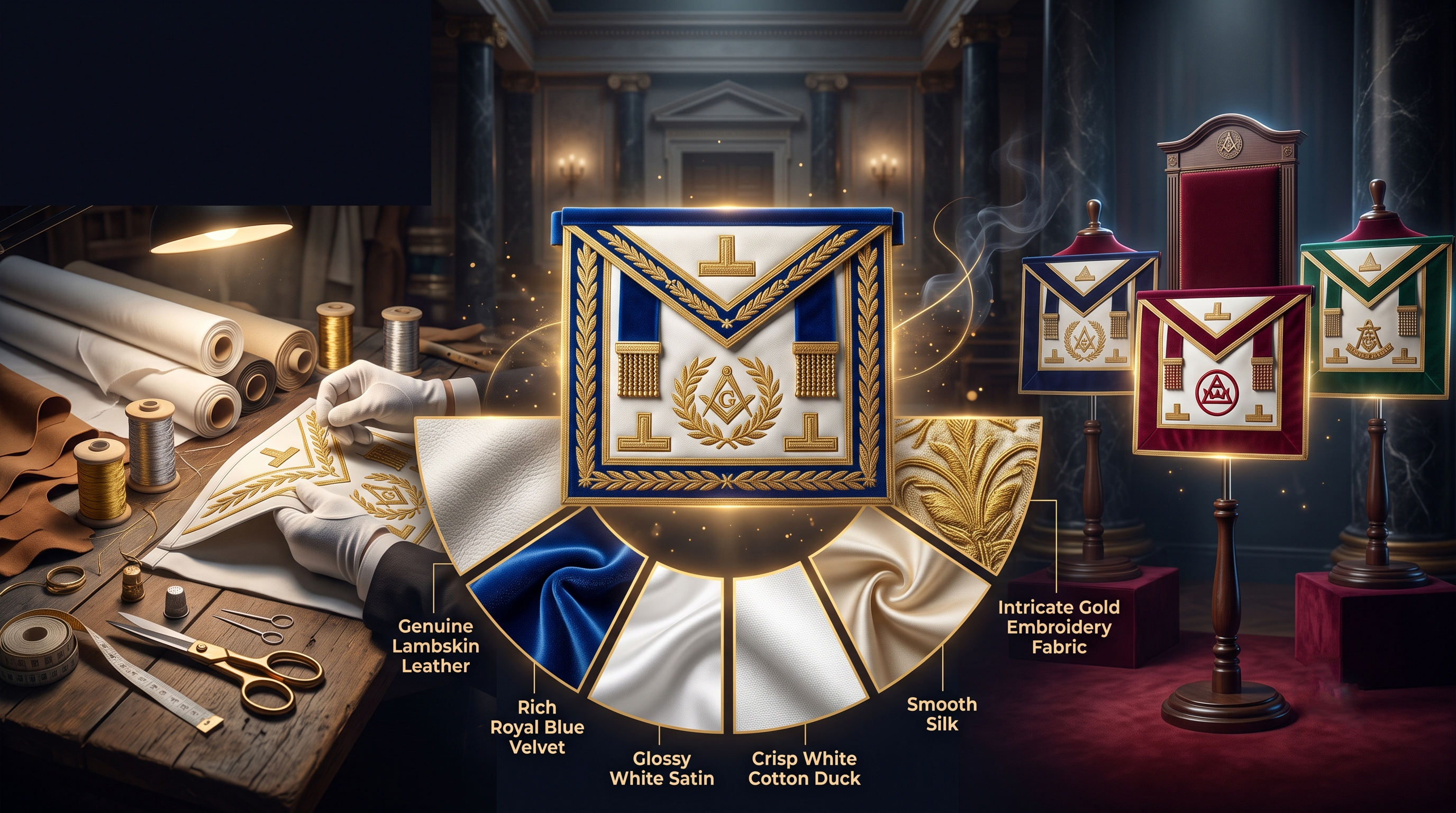
Types of Materials Used in Masonic Aprons
Masonic aprons are an essential part of Freemasonry regalia, symbolizing purity, discipline, and moral values. The type of material used in these aprons plays a key role in their appearance, durability, and ceremonial significance. From traditional leather and lambskin to modern satin and synthetic fabrics, each material reflects different levels of craftsmanship and lodge tradition.
Introduction to Masonic Aprons
Masonic aprons are an important part of Freemasonry regalia and carry deep symbolic meaning. They represent purity, discipline, and moral responsibility. Worn during lodge meetings and ceremonies, they reflect a member’s journey and rank within Freemasonry.
Different Masonic apron materials such as leather, cotton, silk, and velvet are used depending on rank and purpose. Entry-level aprons are simple, while higher-degree aprons use premium materials like lambskin and velvet to show status and tradition.
Historical Background of Masonic Aprons
Masonic aprons originated from medieval stonemasons who used thick leather aprons for protection. Over time, as Freemasonry evolved, the apron became a ceremonial garment instead of a working tool.
Early aprons were made from cowhide and sheepskin for durability. Later, lambskin and fine fabrics were introduced to represent purity and moral development in Freemasonry clothing traditions.
Symbolism of Materials in Freemasonry
Every material used in a Masonic apron has symbolic meaning. In Masonic symbolism, white lambskin represents innocence and purity. Leather reflects strength and hard work, while cotton represents simplicity and equality.
Silk and velvet are used for higher ranks to represent dignity and authority. These symbolic materials help maintain the identity and values of Freemasonry.
Leather Materials in Masonic Aprons
Leather is one of the most traditional materials in Masonic apron design. Cowhide is strong and durable, making it suitable for regular use. Lambskin is softer and considered more refined, often used in premium aprons.
Sheepskin offers a balance between comfort and durability. Over time, leather develops a natural aging effect, which is seen as a symbol of personal growth in Freemasonry.
Cowhide vs Lambskin Aprons
Cowhide aprons are thicker and more durable, making them practical for long-term use. They are often used in basic or working aprons.
Lambskin aprons are more elegant and symbolic. They are widely used in ceremonial settings and are considered the highest standard in Masonic regalia materials due to their purity and softness.
Modern Synthetic Apron Materials
Modern aprons often use PU leather or PVC materials. These synthetic options are affordable and easy to produce, making them common in entry-level Freemason regalia products.
However, they lack the natural texture and aging quality of real leather. They are mostly used for practice or budget-friendly purposes rather than formal ceremonies.
Fabric Materials in Masonic Aprons
Cotton and linen are commonly used fabric materials in aprons. They are lightweight, breathable, and easy to maintain.
Fabric aprons are often used for beginners and provide a smooth base for embroidery of Masonic symbols like the square and compass. However, they are less durable than leather aprons.
Silk and Velvet in Ceremonial Aprons
Silk and velvet are luxury materials used in high-ranking ceremonial aprons. Velvet adds rich texture, while silk provides a smooth and elegant finish.
These materials are often combined with gold embroidery and symbolic designs, making them suitable for officers and Grand Lodge members.
Materials According to Masonic Ranks
Masonic apron materials vary by rank. Entered Apprentices usually wear simple cotton or leather aprons. Fellow Craft aprons may include light decorations.
Master Masons often wear lambskin aprons, while higher officers use velvet and silk designs to represent authority and experience.
Quality Factors in Apron Materials
Good apron materials are chosen based on durability, comfort, and appearance. A quality Masonic apron should be strong, lightweight, and suitable for long ceremonies.
Texture and flexibility are also important to ensure comfort during lodge meetings while maintaining a professional look.
Common Mistakes in Choosing Aprons
A common mistake is choosing aprons based only on appearance instead of durability. Many synthetic aprons look attractive but wear out quickly.
Another mistake is not checking material authenticity, especially when distinguishing between real leather and artificial substitutes.
Sustainability in Apron Materials
Modern Freemasonry regalia production is also focusing on sustainability. Ethical leather sourcing and eco-friendly tanning methods are becoming more common.
Synthetic materials are improving, but traditional leather still remains the most respected choice due to its historical value.
Future of Masonic Apron Materials
Future trends may include hybrid materials that combine leather with eco-friendly fabrics. Advanced embroidery and textile technology will also improve apron design.
Still, traditional materials like lambskin and velvet will remain important due to their deep symbolic meaning in Freemasonry.
Conclusion
Masonic aprons are more than clothing—they are symbols of tradition, discipline, and identity in Freemasonry. Materials like leather, cotton, silk, and velvet each carry unique meaning.
Understanding Masonic apron materials helps appreciate the craftsmanship, symbolism, and history behind this important part of Freemason regalia.
FAQs
1. What materials are commonly used in Masonic aprons?
Leather, cotton, silk, velvet, and synthetic materials are commonly used depending on rank and purpose.
2. Why is lambskin used in Masonic aprons?
Lambskin represents purity and innocence, making it the most symbolic material in Freemasonry.
3. What is the difference between cowhide and lambskin aprons?
Cowhide is stronger and more durable, while lambskin is softer and used for ceremonial and higher-ranking aprons.
4. Are synthetic materials used in Masonic aprons acceptable?
Yes, synthetic materials are used mostly for practice or budget-friendly aprons but are less traditional.
5. Why are velvet and silk used in higher-ranking aprons?
They represent luxury, authority, and ceremonial importance within Freemasonry.